




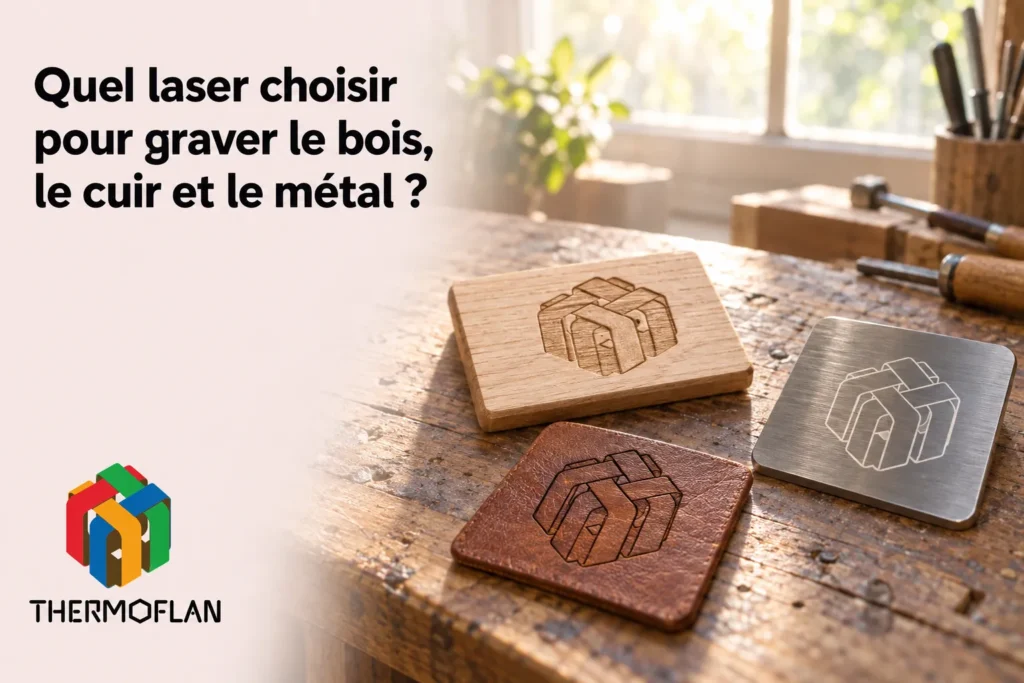
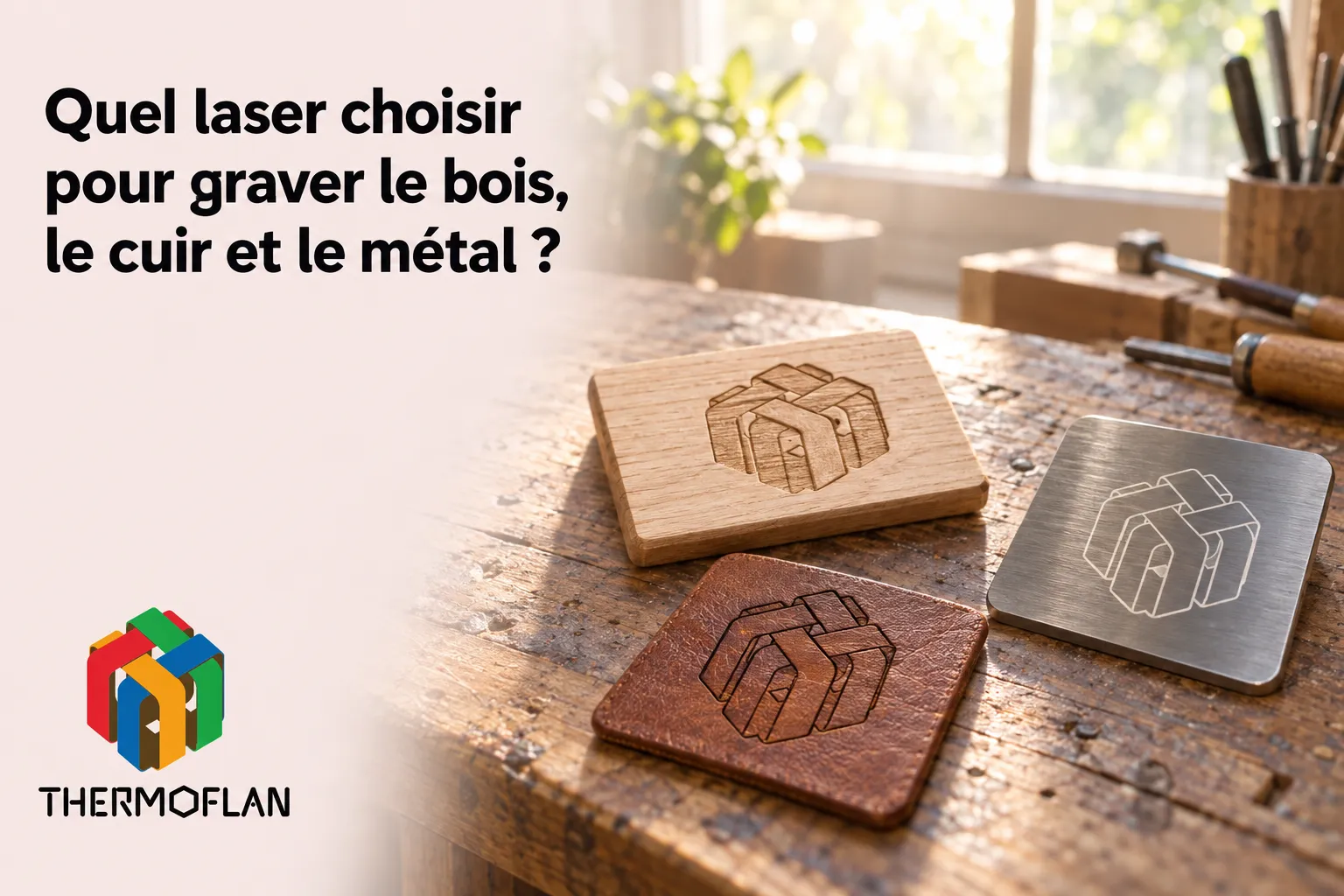
To know which laser to choose for engraving wood, leather, and metal, start with the wavelength, then compare the power, machine format, and budget in euros. This guide compares CO₂, fiber, and UV sources, with the diode as a point of comparison. It then presents the settings by material, Thermoflan machines and their prices, and finally the safety rules applicable in the workshop.
Which laser is suitable for wood, leather, and metal?
Each source emits at a precise wavelength. The material absorbs this wavelength more or less effectively, which determines what the laser beam can engrave or mark. Therefore, the same laser engraving machine does not process an oak board, a cowhide belt, and a stainless steel plate with the same efficiency.
CO₂ for wood and leather
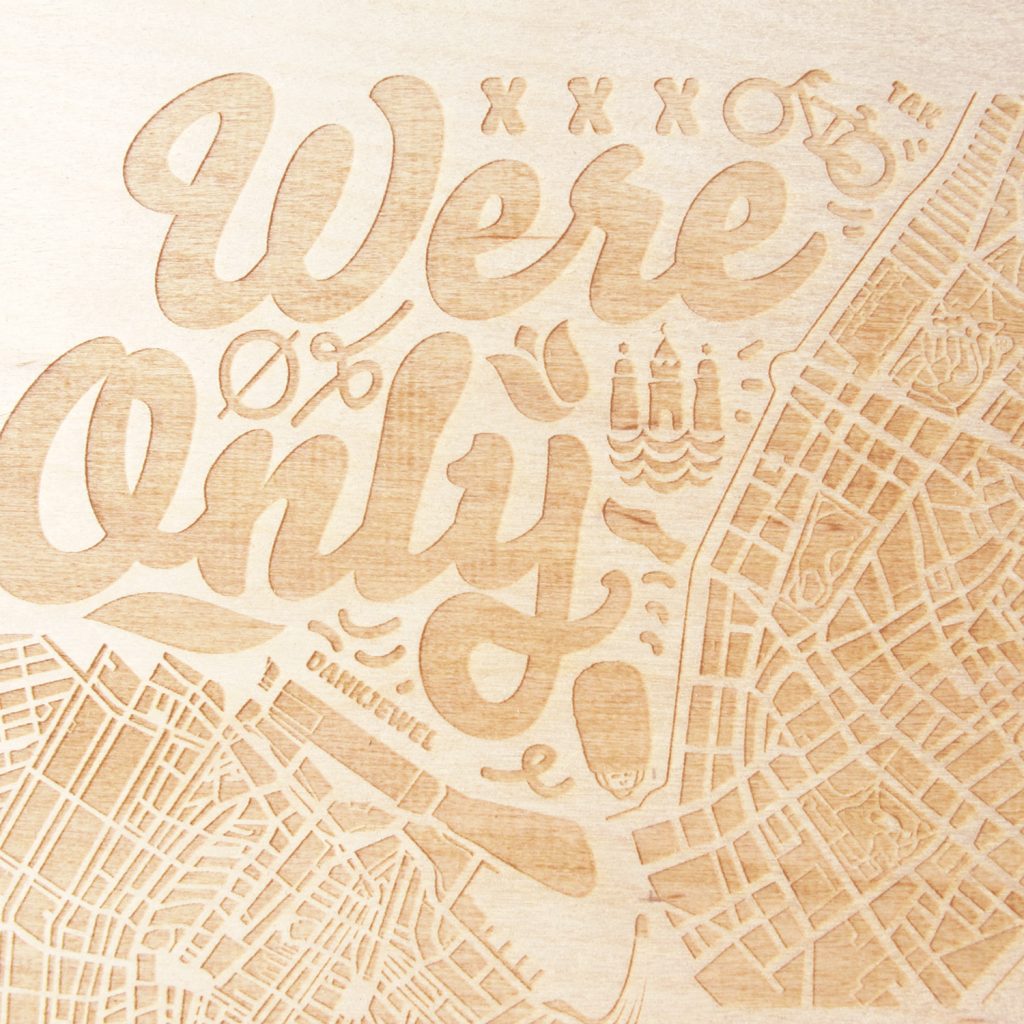
CO₂ lasers emit at 10.6 µm. Wood, leather, and many other organic materials absorb this far-infrared radiation well, which heats them at the targeted spot. This is why CO₂ is the basic technology for workshops that engrave these two materials.
Thermoflan uses CO₂ particularly on the following materials:
- Solid wood and veneers: engraving of logos, texts, or decorative patterns.
- Plywood and MDF: panels where the adhesive affects the result, requiring them to be tested.
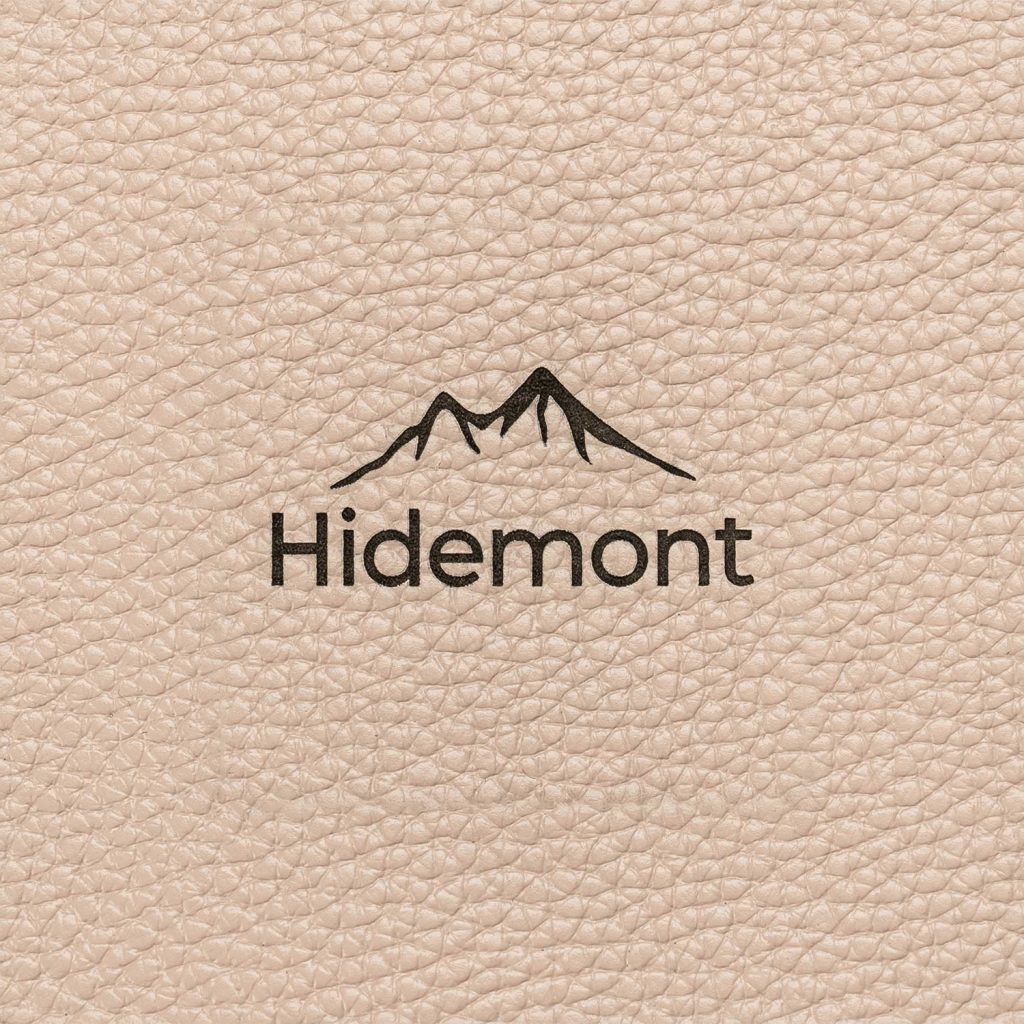
- Compatible composition leather: personalization of bags, wallets, and belts.
With metal, CO₂ changes its role: it only works on the surface layer of certain lacquered or coated metals. A standard model is not suitable for bare polished or highly reflective metal.
Fiber and diode for distinct uses
Fiber lasers, in their current professional version, operate at 1,064 nm. This is the standard for marking or engraving bare metals. Conversely, wood and leather generally absorb this wavelength less effectively, making fiber less suitable for them.
The blue diode, often emitting around 450 nm, serves here as a point of comparison. It engraves wood and can mark the surface of leather. For wood, 5 W is an entry-level power, 10 W is a common choice, and 20 W provides more versatility. The 40 W power is primarily aimed at thick cutting. On a machine that combines a diode and an infrared source, each source retains its own capabilities: only the infrared source processes metal.
The Role of UV in Selection
UV lasers are recommended for delicate materials. However, no specific performance data is available to compare its effectiveness on wood, leather, and metal. In practice, first choose the source that your material absorbs well, then verify that it provides the desired contrast, fineness, and depth.
Engraving and cutting are two different applications. A laser source suitable for engraving a logo might lack the power required for cutting thick plywood.
| Source | Wavelength | Wood | Leather | Metal |
| CO₂ | 10.6 µm | Engraving and Cutting | Engraving (compatible composition) | Lacquered or Coated Layer Only |
| Fiber | 1,064 nm | Generally less suitable | Generally less suitable | Marking and Engraving of Bare Metal |
| Blue Diode (comparison) | Approximately 450 nm | Engraving, from 5 to 40 W | Surface Marking | No reference for bare metal |
| UV | No Quantified Data | Delicate materials, no quantified performance data | No Quantified Data | No Quantified Data |
Which laser to choose for metal engraving?
For engraving metal, fiber lasers are essential. The remaining steps are to choose the power, identify the surface condition of the part, and adapt the workstation to the size of the parts. These three criteria determine both the result and the production rate.
Bare Metal and Required Power
On a desktop machine, a fiber of around 20 W is a common power for true bare metal engraving. This is not a universal threshold. Professional systems range from 20 to 120 W. Higher power, combined with a small laser spot, can improve speed or depth, but is not enough to guarantee the result.
Behavior changes depending on the metal and the desired depth:
- Steel and stainless steel: contrast marking or deeper engraving.
- Aluminum: settings specific to this alloy.
- Brass and copper: metals also processed by fiber.
- Titanium: compatible, with parameters specific to this metal.
Thermoflan presents its range of fiber laser engraving machines for all these metals. For the same part, a setting is only valid for a given metal.
Treated metal, marking and deep engraving
Bare, anodized, painted, or plated metal each require a different treatment. The difference lies in the intended operation: laser marking alters the appearance or color of the surface by removing little to no material, while engraving removes material to create depth. Power, speed, pulse frequency, and focus determine the resulting operation. Therefore, a machine’s ability to mark says nothing about its speed or depth in engraving.
Traceability and format of metal parts
Fiber allows for inscribing references, serial numbers, logos, barcodes, QR codes, or DataMatrix codes onto parts. These markings serve to identify each component throughout its lifespan.
To ensure these codes remain legible, size the markings according to the future use conditions of the parts: friction, handling, exposure. In series production, loading, positioning, and time per piece also impact production.
The size of the parts guides the choice of workstation. Thermoflan offers portable fiber lasers for on-site marking of bulky parts, as well as fixed workstations. A motorized X-Y table allows processing multiple areas without manually repositioning the part.
What power and settings for wood and leather?
With a CO₂ laser, the result depends as much on the material as on the machine. The type of wood, the type of leather, and the focus determine the initial settings, which then need to be validated through tests.
Adapting engraving to the type of wood
The rendering varies with the density, color, and fiber orientation of the wood. On a laser engraver for wood, softwoods like balsa or poplar generally require less power than hardwoods.
- Resinous woods: Pine and cedar burn more easily than oak or maple.
- Glued panels: The glues in plywood and MDF change how the panel reacts to the laser.
- Focal length: For details engraved with a CO₂ laser, a focal length of 1.5 or 2 inches is generally used.
For cutting, Thermoflan advises against MDF thicker than 6 mm: the edge is very burnt and cutting produces a lot of smoke.
Check the composition of the leather
Before any laser engraving on leather, ensure the piece is clean and dry. The type of leather, its thickness, and its finish determine the initial settings to try. Suede and nubuck often require less power and an adapted speed to avoid burns, whereas cowhide and vegetable-tanned leather are set differently.
Also identify the composition of imitation leather before processing it: some contain PVC, which Thermoflan prohibits for laser use. On compatible leather, a low-tack adhesive tape can protect the surface, with the risk of leaving residues.
Test power, speed, and focus
For the same material, increasing the power or slowing down the beam can deepen the engraving, but also increases the risk of burning. No universal rule allows converting watts into millimeters of depth. On a scrap piece of the same material, vary the power and then the speed, one at a time.
Before these tests, check the distance between the lens and the workpiece. Then, if necessary, test the number of passes and air assist. Evaluate each test based on contrast, fineness, depth, and burn marks. Save the chosen profile, and repeat the tests whenever the material changes.
What criteria and budget for equipping the workshop?
Once the technology is chosen, the machine’s format, its precision, and the total cost of the station determine the investment. Thermoflan advises defining the actual need before choosing a solution capable of evolving with the activity.
Surface, precision, and throughput
The working surface must correspond to the dimensions and the number of parts to be processed. Thermoflan machines range from 450 × 300 mm to 1,600 × 1,000 mm. Precision depends on the laser spot, optics, focusing, and the mechanics that move the laser head. Therefore, the spot size indicated on the technical sheet is not sufficient to judge the actual precision.
For production runs, also compare part positioning, repeatability, and the scrap rate. For cups, rings, and other cylindrical objects, provide a rotary tool.
Compact or Industrial CO₂ Machines
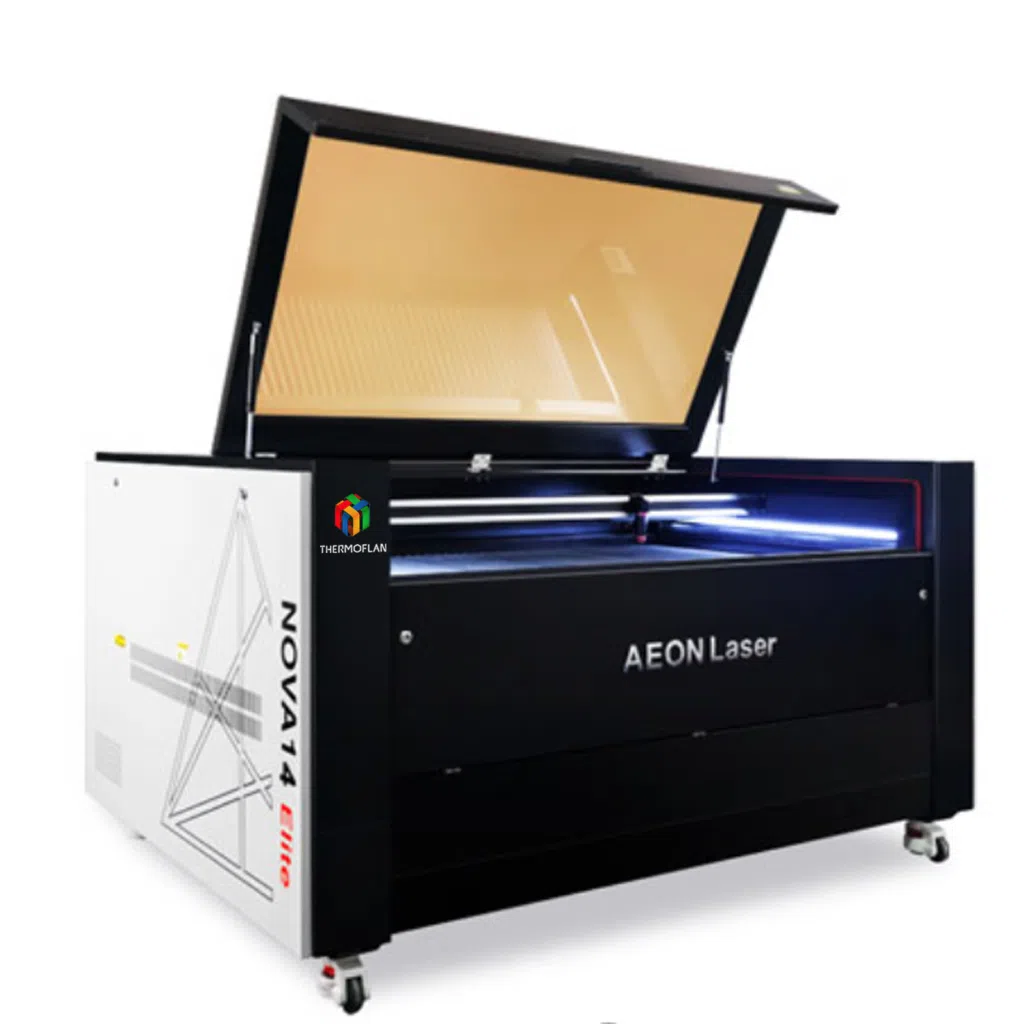
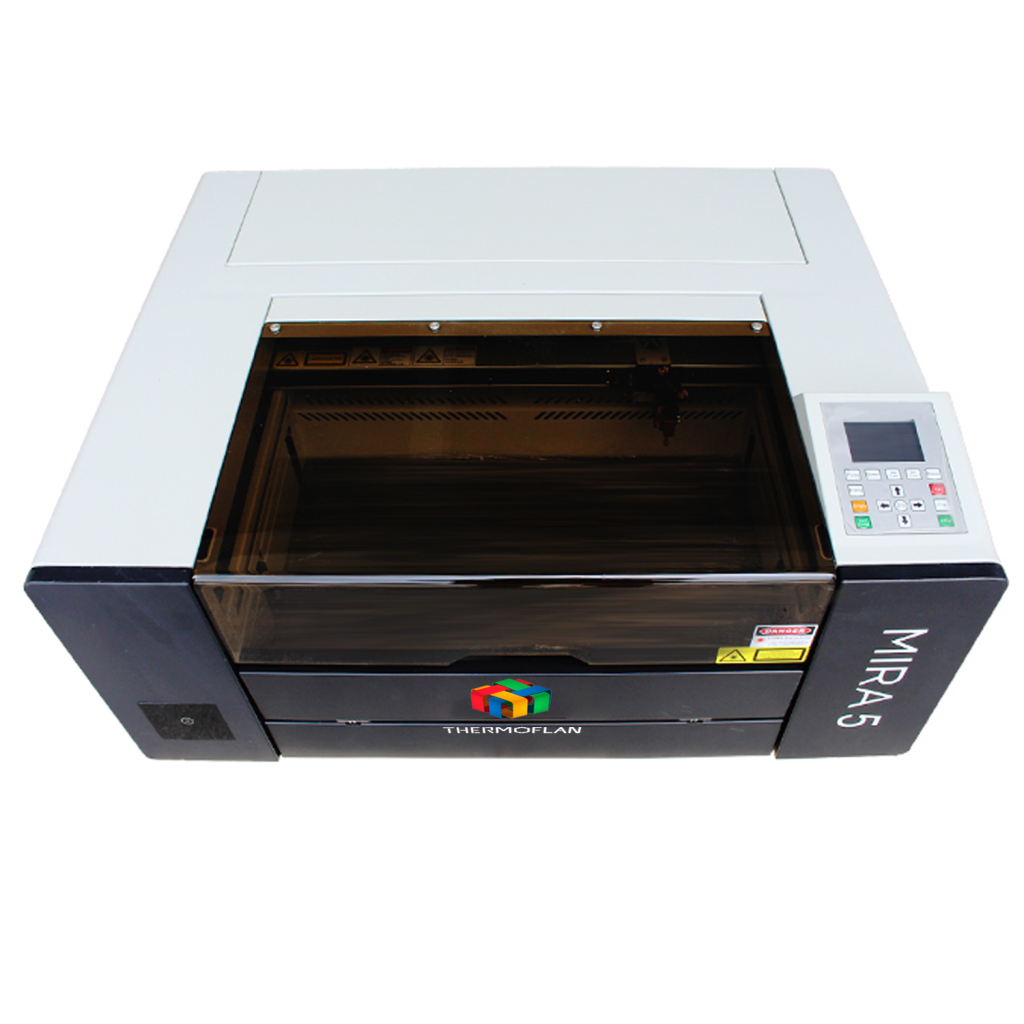
Thermoflan offers the compact CO₂ laser engraver Mira 5 starting from 5,840 €, for customization and prototyping. Its working surface is 500 × 300 mm and its maximum height is 120 mm. It is available with a 40 or 60 W glass tube, or with a 30 W RF tube. The announced engraving speed reaches 1,200 mm/s with the glass tube and 2,000 mm/s with the RF tube.
For industrial use, the I4000 industrial CO₂ laser machine is offered starting from 23,300 €. It provides a surface of 1,000 × 600 mm and RF tubes of 30, 40, 60, 80, or 100 W. Its pass-through doors allow large parts to be inserted.
Cost of the Equipped Workstation and Operation
The price of a laser cutting machine alone does not correspond to the budget for a ready-to-produce workstation. Depending on the use, an enclosure, extraction or filtration, air assist, optics, and workpiece holding systems must be added. The cooling system also depends on the tube: a glass CO₂ laser tube, an economical solution, generally uses water circulation cooling. The RF tube reacts faster to power variations and is suitable for fine engravings as well as intensive production rates.
In use, the production cost includes materials, preparation, optics cleaning, consumables, maintenance, and scrap. Therefore, the purchase price alone does not allow for comparing two workshops.
CO₂, fiber, or UV: the laser adapted to your materials
Wood, leather, or metal: compare our CO₂, fiber, and UV machines, from 450 × 300 to 1 600 × 1 000 mm. Our experts help you define your actual needs.

What safety rules should be observed in the workshop?
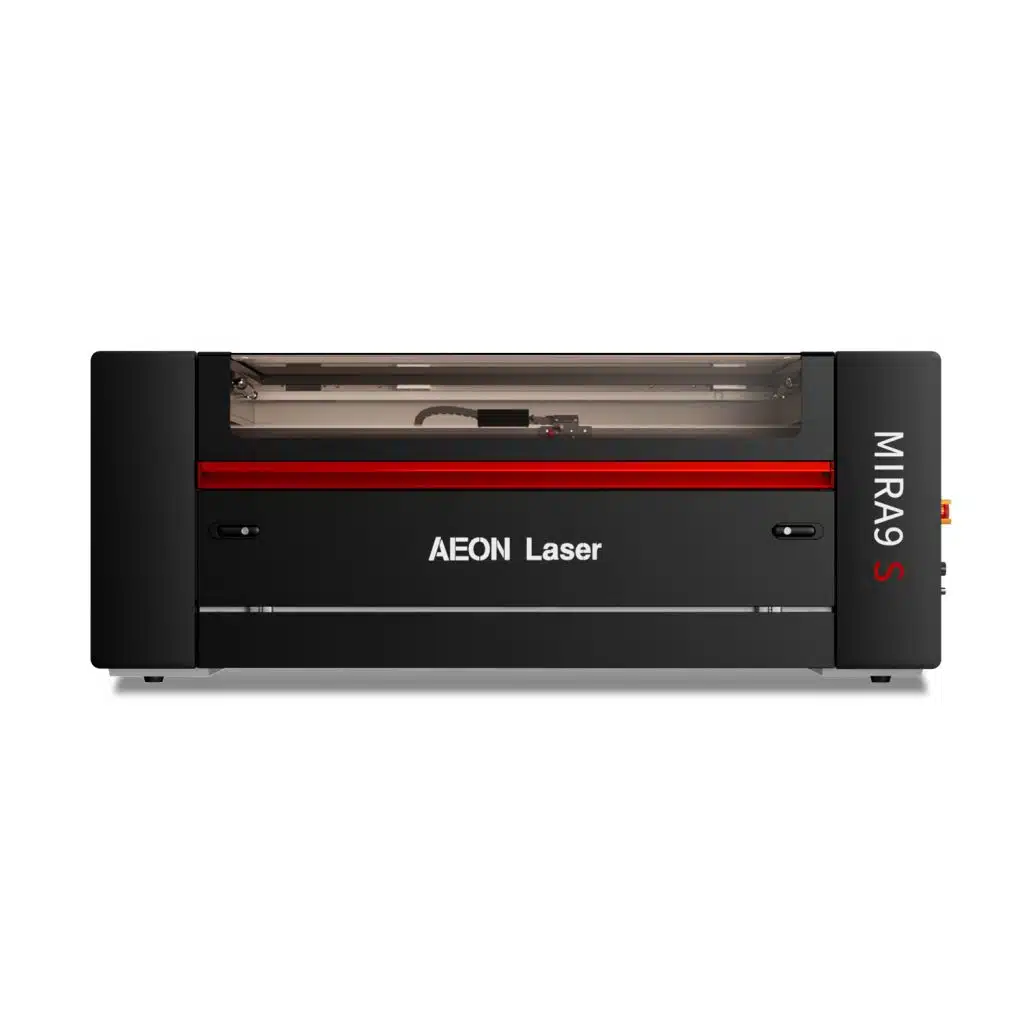
A laser engraver exposes operators to radiation and emissions produced by the material. Workstation safety relies on the choice of materials, machine containment, and compliance with the French regulatory framework.
Radiation, fumes, and prohibited materials
According to INRS, the beam’s action on material can produce fumes, gases, and particles. Depending on the application, optical, electrical, and fire risks are also present.
- Class 4: risks to eyes and skin, including from certain diffuse reflections.
- Complete product: the class to check is that of the entire machine, depending on how the operator may be exposed.
- Chlorine and fluorine: Thermoflan prohibits PVC, vinyl, and PTFE due to the gases they can emit.
A powerful source integrated into a closed enclosure does not expose the operator in the same way as a machine where the beam remains accessible.
Confinement and emission extraction
The INRS notably recommends confining radiation where possible, controlling access to the machine and its controls, and training operators.
When comparing equipment, examine the enclosure, interlocks, open-door stop, and emergency stop. If the risk assessment specifies protective eyewear, it must be adapted to the source’s wavelength.
However, the cover does not replace emission capture. Air assist acts at the engraving point, while extraction evacuates fumes out of the operator’s breathing zone.
Machine compliance and professional obligations
In France, articles R.4452-1 to R.4452-31 of the Labor Code regulate professional exposure to artificial optical radiation. Employers integrate this risk assessment into the single professional risk assessment document (DUERP). Laser device hazard classes are defined by standard EN 60825-1.
CE marking corresponds to a declared conformity under the manufacturer’s responsibility. It is not an independent certification. Regulation (EU) 2023/1230 on machinery will apply from January 20, 2027, and will then replace Directive 2006/42/EC.
Frequently asked questions
What laser power is needed to engrave wood?
For engraving, a low power is often sufficient: higher power is mainly used to go faster. For comparison, a diode starts at 5 W, 10 W is a common choice, and 20 W gives more leeway. 40 W aims at thick cutting, where stronger power allows for cutting thicker and faster.
Can polished metal be engraved or cut with a CO₂ laser?
No. A standard CO2 laser should neither engrave nor mark polished or highly reflective metals, such as chrome, which can severely damage the machine. The described CO2 machines also do not cut most metals.
Should one choose a glass CO2 tube or an RF tube for its lifespan and maintenance?
The RF tube generally lasts longer and requires less maintenance. It is suitable for fine engravings and intensive production rates. The water-cooled glass tube remains an economical solution, and its high power capabilities give it good cutting performance.