





View all news
Industrial Traceability: Identify and Track Parts for Life
Industrial traceability means identifying every part, batch or product uniquely and being able to retrieve its history throughout its life cycle. It relies on permanent marking, readable by an operator or a scanner, that withstands processing, wear and time.
For 60 years, Thermoflan, a French manufacturer and distributor based in Molières-Cavaillac (Gard), has equipped manufacturers with part marking solutions: fiber, CO₂ and UV laser marking, engraved or photosensitive nameplates, pad printing and UV printing.
Our permanent stock, technical team and after-sales service ensure fast, lasting implementation. This guide explains what is at stake in traceability and helps you choose the right technology for your parts.
What Is Industrial Traceability?

Definition and Stakes
Industrial traceability is the ability to follow a part from raw material to end of life, linking every step to a unique identifier. That identifier may be a serial number, a batch number or a 2D code.
The stakes are twofold: proving a product’s compliance at any time, and tracing a defect back to its origin without halting an entire production line. Without permanent marking on the part itself, the information is lost as soon as the label or accompanying document disappears.
The Three Levels: Upstream, Internal and Downstream Traceability
Upstream traceability covers purchased materials and components: material certificates, supplier batches. Downstream traceability follows the finished product through distribution to the end customer.
In between, internal traceability links the part to the operations performed in the plant: machining, treatment, inspection, assembly. This is where Thermoflan operates, with equipment that marks the identifier directly on the part at the right point in the process.
Why Is Traceability Essential in Industry?
Regulatory Compliance and Standards
Many standards require permanent part identification. ISO 9001 requires product identification and traceability where applicable; IATF 16949 in automotive and AS9100 in aerospace reinforce this requirement.
In medical devices, EU MDR 2017/745 and ISO 13485 require the UDI on the device itself when it is reusable. In cosmetics, EU Regulation 1223/2009 requires a batch number on every unit.
Product Safety and Recall Management
When a defect is detected, part traceability isolates precisely the serial numbers or batches concerned. The recall is limited to products actually affected, rather than an entire range.
This precision protects users, contains costs and safeguards the manufacturer’s reputation.
Quality, Non-Conformities and Continuous Improvement
An identifier read at every workstation feeds the quality system with real data: which machine, which operator, which material batch, which settings. Non-conformity analysis becomes factual and fast.
That data drives continuous improvement and reduces scrap, making industrial traceability a performance tool rather than a mere constraint.
Anti-Counterfeiting
A permanent mark that is hard to reproduce, such as a laser-engraved Data Matrix or a MetalPhoto nameplate, authenticates a genuine part. It protects the brand, its customers and end-user safety, especially for critical spare parts.
Marking Technologies for Industrial Traceability
Fiber, CO₂ and UV Laser Marking
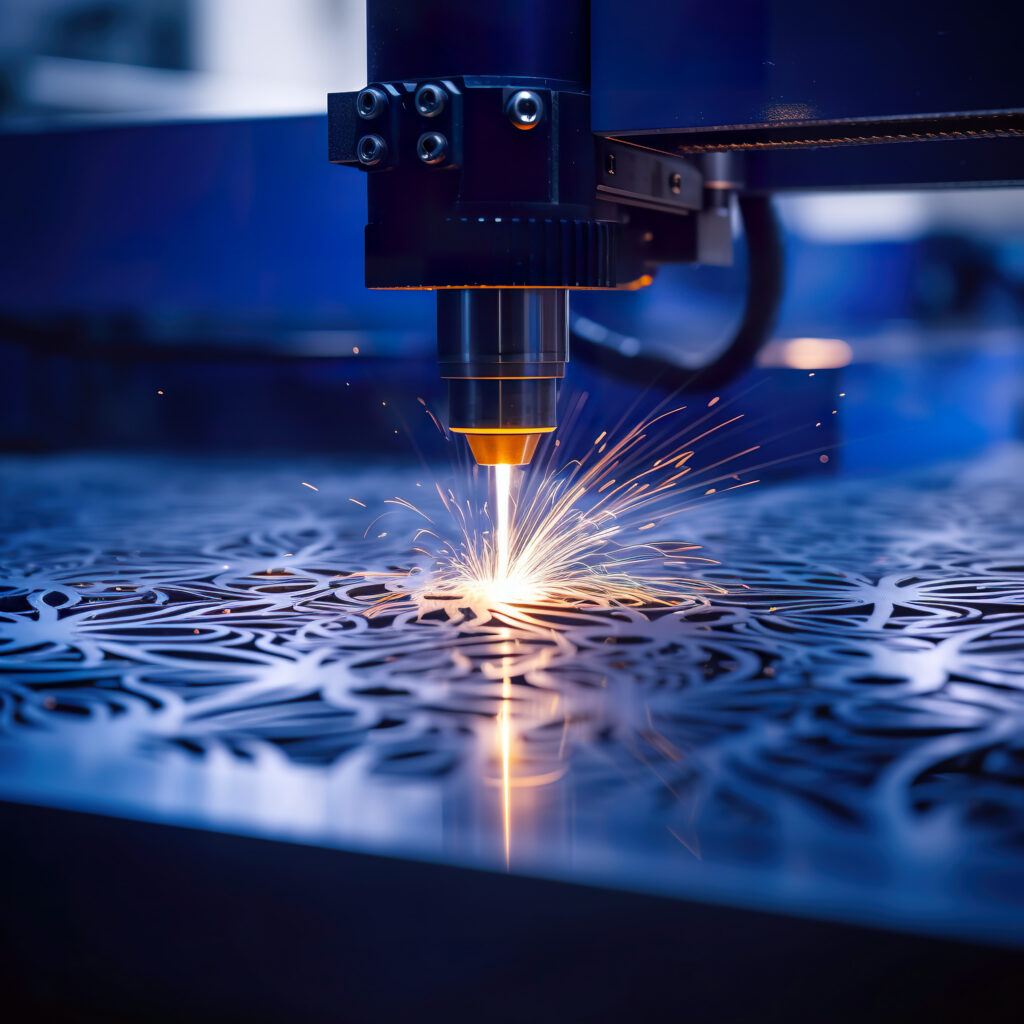
Laser marking is the reference for traceability through permanent marking. The fiber laser marks metals and engineering plastics by annealing, engraving or ablation; the CO₂ laser handles organic materials and treated-aluminium plates; the UV laser cold-marks sensitive plastics and glass.
With no contact and no consumables, the laser engraves serial numbers and 2D codes directly onto the part. To go further, read our complete guide to industrial laser marking.
Engraved and Photosensitive Identification Plates
When the part cannot be marked directly, an identification plate takes over. MetalPhoto photosensitive aluminium plates seal the image beneath an anodised layer, giving high resistance to chemicals, UV and abrasion, which makes them the reference for manufacturer nameplates in aerospace and defence.
AlumaMark plates are CO₂-laser marked with a deep black, and ID-Mark photosensitive plates are water-developed in the workshop. Discover our range of identification plates and industrial signage.
Pad Printing and UV Printing
Pad printing transfers ink with a soft pad onto flat, curved or irregular surfaces. It suits batch numbers and logos on plastic parts or bottles in series.
UV printing prints QR codes and variable text in colour, with instant curing, on many substrates. Both processes complement the laser when colour or unit cost matters more than absolute permanence.
| Criterion | Fiber laser | CO₂ laser | UV laser | Engraved / photosensitive plate | Pad printing / UV printing |
|---|---|---|---|---|---|
| Materials | Metals, engineering plastics | Organics, glass, treated aluminium | Sensitive plastics, glass, electronics | Any substrate (attached plate) | Plastics, glass, painted metal, wood |
| Permanence | Very high | High | High | Very high (MetalPhoto) | Good to moderate |
| Resistance to processing | Excellent (deep engraving, annealing) | Good | Good | Excellent (chemical, UV, abrasion) | Limited to selected inks |
| Throughput | Very high (galvo) | High | High | Plate batches | High in series |
| Consumables | None | None | None | Plates | Inks, pads or clichés |
| Key sectors | Automotive, aerospace, medical | Signage, packaging | Electronics, medical, cosmetics | Aerospace, defence, machinery | Cosmetics, electronics, plastics |
Identifiers: What Do You Mark on a Part?
Serial Number and Batch Number
A serial number identifies a single part; a batch number groups parts produced under the same conditions. The former is essential for critical components and medical devices, the latter is often sufficient for consumables and cosmetics.
Marking software handles automatic incrementing and prevents duplicates, securing day-to-day part marking.
Data Matrix and 2D Codes
The Data Matrix is the most widely used 2D code in industrial traceability. Standardised as ECC200, it embeds error correction that allows reading even when part of the code is damaged.
Highly compact, it can be engraved on a few square millimetres, on a screw, an implant or a circuit board. It carries the serial number, date, reference and much more, following GS1 or UID standards.
QR Code and Barcodes
The QR code can be read with a smartphone, which makes it practical for maintenance, user instructions or end-user authentication. The linear barcode remains common in logistics, but it needs more surface and tolerates wear less well.
For permanent marking on a part, Data Matrix or QR codes are preferable to 1D barcodes.
Alphanumeric Marking and Logos
Human-readable text remains essential: reference, date, operator, logo, CE marking or regulatory symbols. It complements the 2D code and allows identification without a scanner.
Laser and pad printing reproduce logos and fonts with fine detail, even on very small parts.
Traceability by Sector
Aerospace, Automotive and Defence
AS9100, IATF 16949 and defence UID requirements demand a permanent mark that stays legible for the part’s whole life, including after painting or heat treatment. Deep fiber-laser engraving and MetalPhoto nameplates are the norm. See our solutions for automotive, military and aeronautics.
Medical and Laboratory
Surgical instruments, implants and laboratory consumables carry a UDI compliant with EU MDR 2017/745. Laser annealing on stainless steel and UV marking on polymers ensure legibility after repeated sterilisation. Discover our answers for healthcare, medical and laboratory.
Industry, Metalworking and Foundry
Tools, moulds, machined parts and raw castings are identified for asset management, warranty and anti-counterfeiting. Deep engraving and engraved plates withstand shot blasting and harsh workshop environments. See our solutions for industry, tools and metalworking.
Cosmetics and Wellness
EU Regulation 1223/2009 requires a batch number on every bottle, tube or carton. UV laser, pad printing and UV printing mark packaging without spoiling its appearance. Explore our applications for wellness and cosmetics.
How to Choose Your Traceability Solution
Part Material and Environment
Bare metal, plastic, glass, painted surface: the material points to a fiber, CO₂ or UV laser, or to an attached plate when the part is inaccessible. The environment matters just as much: heat, oil, chemicals or outdoor exposure call for a recessed permanent mark or a sealed plate.
Long-Term Legibility and Usage Constraints
A code read for twenty years by an industrial scanner has different requirements from a batch read once in logistics. Plan the contrast, the Data Matrix cell size and the abrasion resistance according to the part’s real life cycle.
Throughput and In-line Integration
A standalone laser station is sufficient for batches and quality control. A galvo station integrated into the line, driven by your production management system, marks and verifies every part without slowing throughput.
Standards Applicable to Your Sector
| Sector | Standard or regulation | Identifier | Recommended technology |
|---|---|---|---|
| Medical | EU MDR 2017/745, ISO 13485 | UDI (Data Matrix) | Fiber laser (annealing), UV laser |
| Automotive | IATF 16949 | Serial number, Data Matrix | Fiber laser |
| Aerospace, defence | AS9100, UID | ECC200 Data Matrix | Fiber laser, MetalPhoto plate |
| Cosmetics | EU 1223/2009 | Batch number | UV laser, pad printing, UV printing |
| General industry | ISO 9001 | Reference, serial, QR code | Fiber or CO₂ laser, engraved plate |
Send us a part and your constraints: we test the marking and recommend the simplest, most durable traceability solution.
Ask an expertOur Marking Machines for Industrial Traceability
Thermoflan offers every technology for industrial traceability through permanent marking, in stock and delivered with training. Our laser engraving and cutting category brings together fiber, CO₂ and UV lasers, as flatbeds or galvo stations, to engrave serial numbers and 2D codes directly onto your parts.
Our signage range includes MetalPhoto, AlumaMark, ID-Mark, DuraBlack and Polycolor identification plates for manufacturer nameplates and durable labels.
Finally, our pad printing machines and UV printers address batch marking in series, with or without colour.


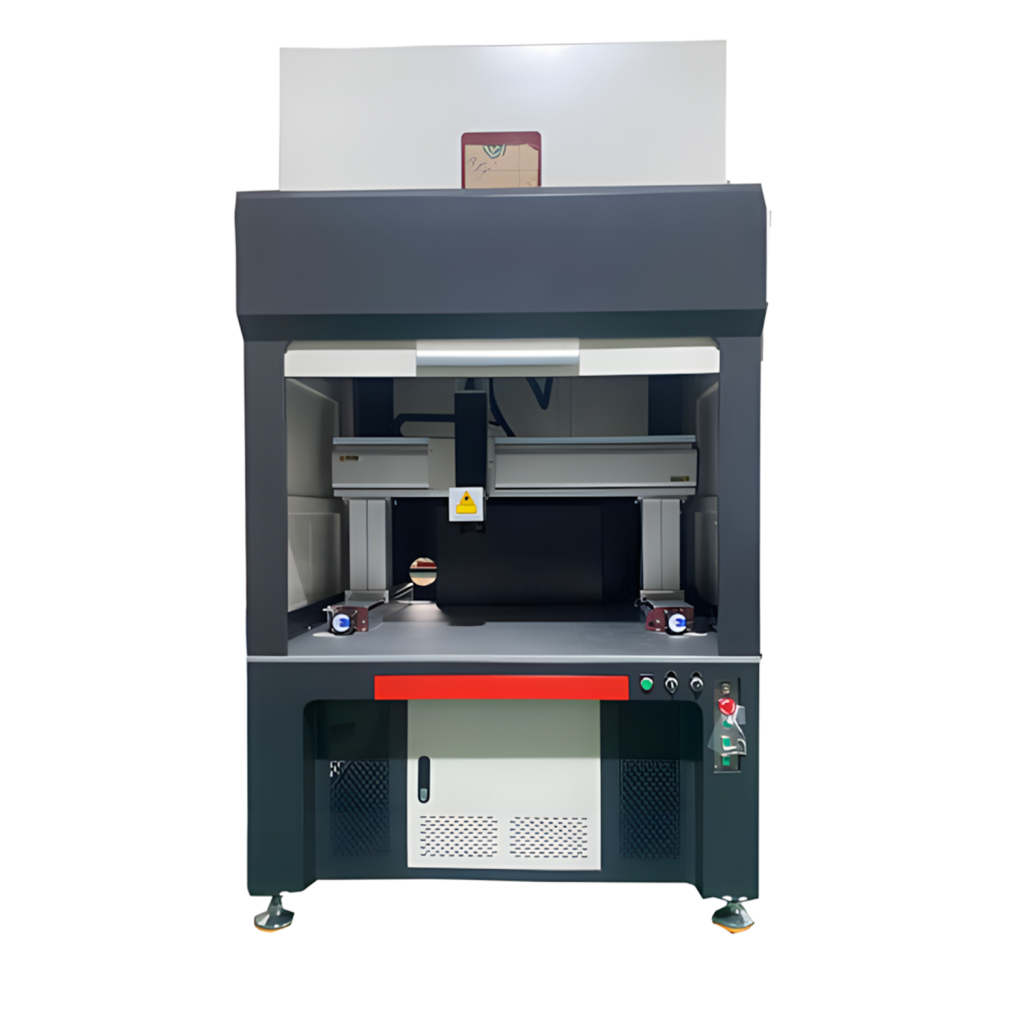
Test our marking machines on your own parts, at Molières-Cavaillac or remotely.
Request a demoThermoflan, Your Traceability Partner for 60 Years
For 60 years, Thermoflan has supported manufacturers in identifying their products. We know the demands of quality audits and the realities of the shop floor, and we always favour the simplest solution that genuinely meets the standard.
Our permanent stock of machines, plates and consumables avoids supply delays. Our technical team and after-sales service support you from the initial trial through parameter set-up and over the long term.
Finally, we offer the best value for money for reliable industrial traceability, without oversizing your installation. Our FAQ answers common questions about marking and identification.
Describe your traceability project and receive a tailored proposal through our quote form.
Request a quoteLes avantages THERMOFLAN
Plus de 60 ans d’expérience
Stock permanents
Meilleur rapport qualité / prix
Disponibilité technique
Demandez conseil à nos experts
Comment pouvons-nous vous aider ?