






Foundry marking: identify and trace castings
In foundry work, traceability starts at pouring: the casting number, reference, batch or traceability code must follow the part through sand removal, shot blasting, heat treatment and machining. Raw, rough or oxidised surfaces make markings harder to read.
Thermoflan helps foundries and subcontractors choose a marking technology that can withstand these steps and place the marking at the right point in the process.
Marking challenges in foundry work
Difficult surfaces
Roughness, porosity, scale or sand residue: the surface of a raw casting reduces the contrast and readability of a marking, especially for codes read by machine.
Withstanding finishing operations
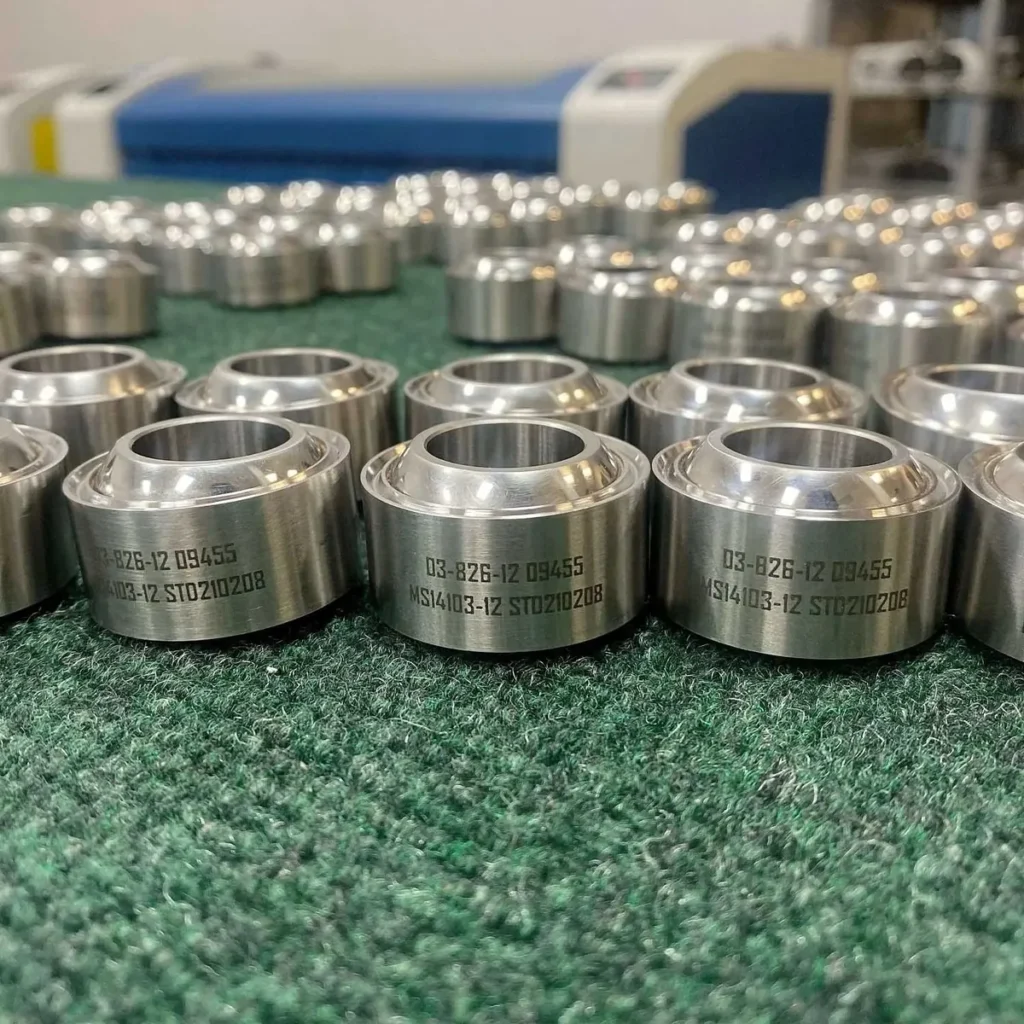
Shot blasting, sandblasting or heat treatment can erase a surface marking. A deeper engraving, or marking carried out after these steps, ensures readability.
Tracking the part from pouring onward
Linking each part to its casting and batch makes it possible to trace its history in case of a defect and to meet customer requirements.
Heavy and varied parts
The size and weight of parts often require on-site marking, with equipment suited to the workshop environment.
Our technologies for foundry work
Fibre laser engraving
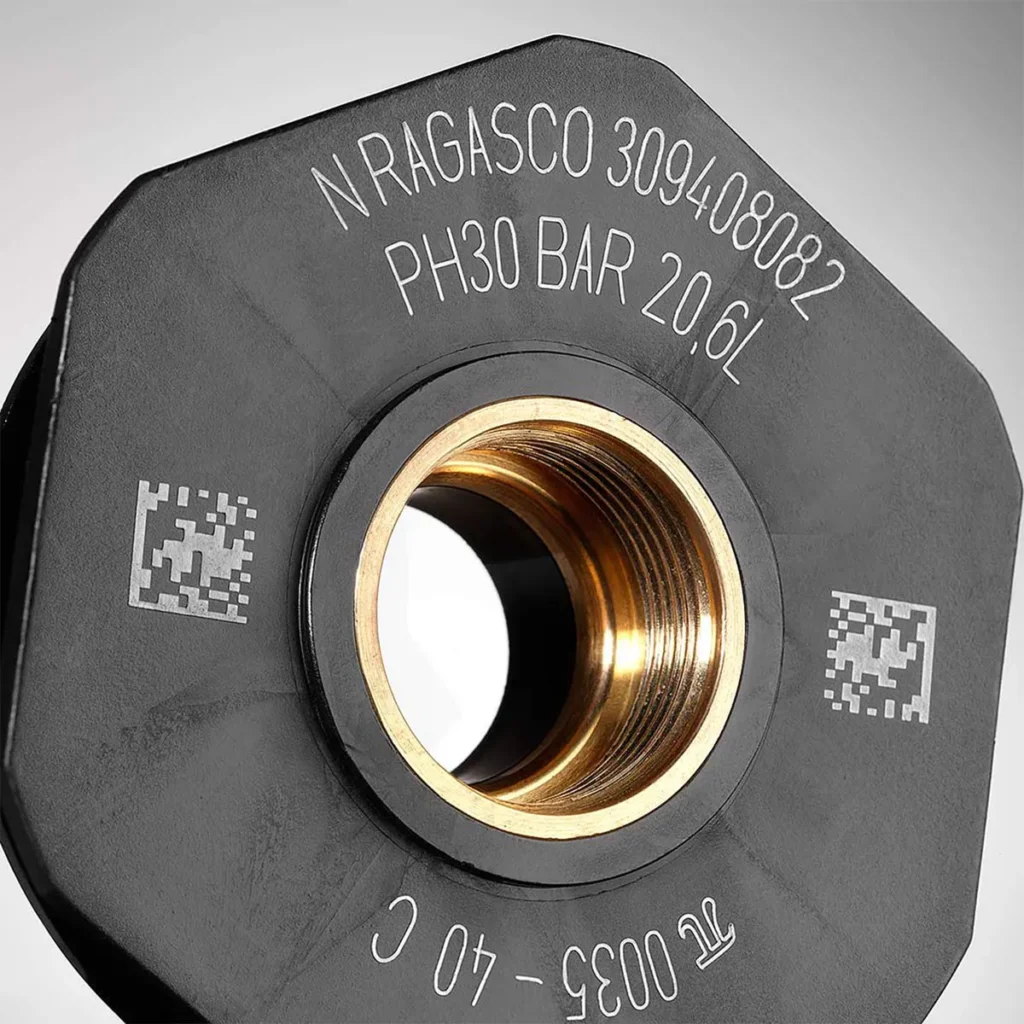
The fibre laser engraving system performs deep engraving on cast iron, steel and aluminium, readable even after shot blasting, as well as DataMatrix codes on prepared surfaces.
Portable fibre laser
For heavy or bulky parts, a portable fibre laser system lets you mark directly at the workstation, without moving the part to a machine.
CO2 laser
The CO2 laser is used for cutting and marking labels, templates and non-metallic identification media.
UV printing
The UV printer produces plates, rigid labels and workshop signage in colour.
Which marking at which step?
General guidelines, to be adapted to your process and validated by trials.
| Step | Surface | Recommended marking | Point of attention |
|---|---|---|---|
| Raw casting | Rough, oxidised | Deep fibre laser engraving | Limited contrast for machine-read codes |
| After shot blasting | Uniform, matt | Fibre laser engraving, DataMatrix codes | Module size suited to the reader |
| After machining | Smooth | High-contrast fibre laser marking | Place the marking outside functional areas |
| Heavy part | Variable | Portable fibre laser | Workstation stability and laser safety |
Traceability and quality in foundry work
A well-chosen marking links each part to its casting, its batch and its inspections. It makes quality investigations easier, sorting in case of non-conformity, and compliance with customer requirements, particularly in automotive and industry.
To go further, see our guide to industrial traceability and our page on industrial laser marking.
Application examples
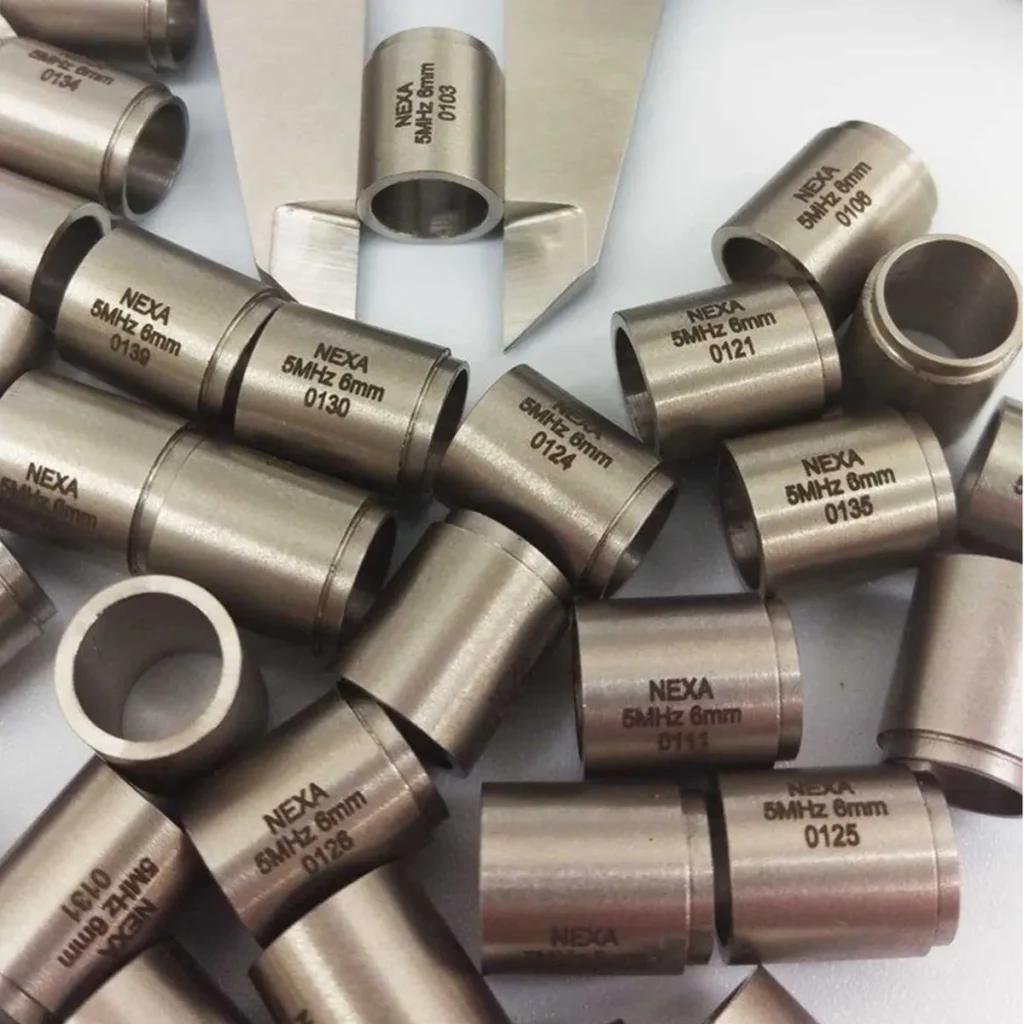
Cast iron and cast steel parts
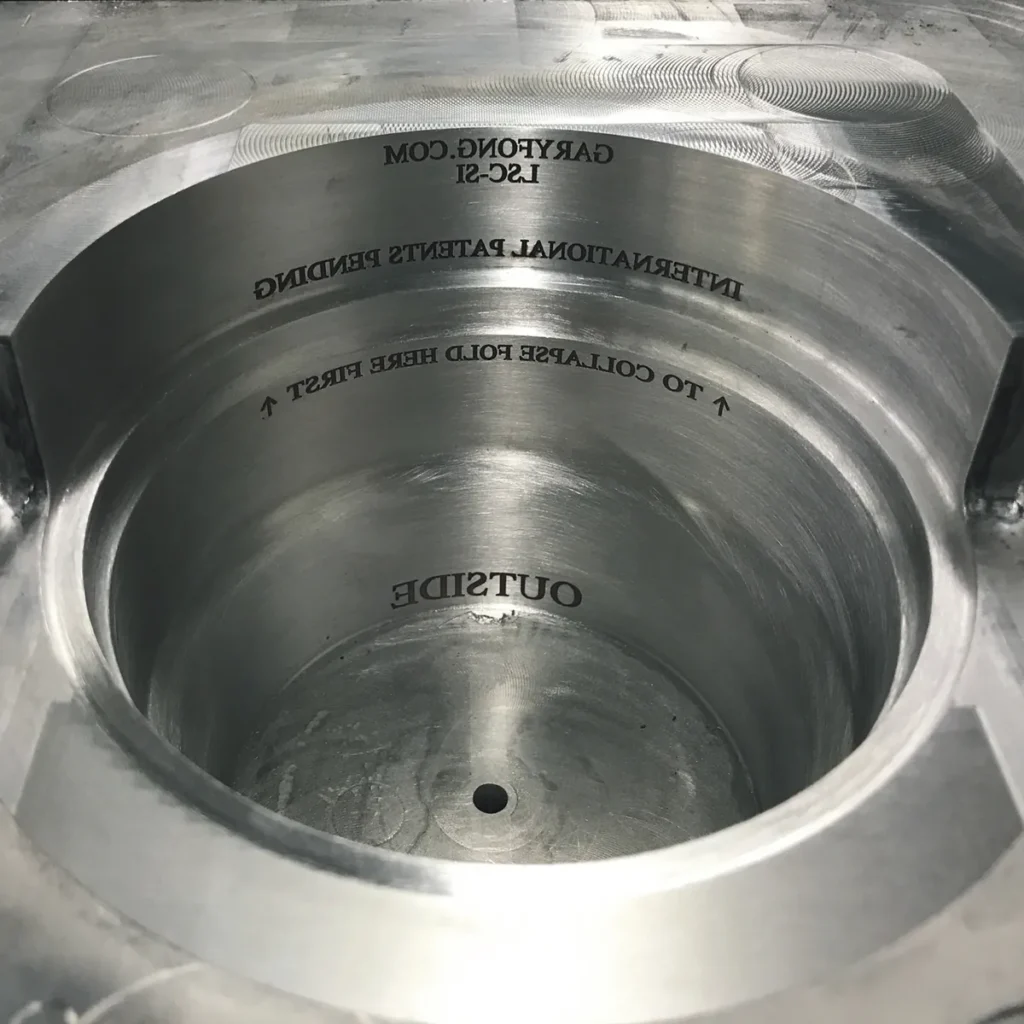
Casting numbers and references engraved deeply.
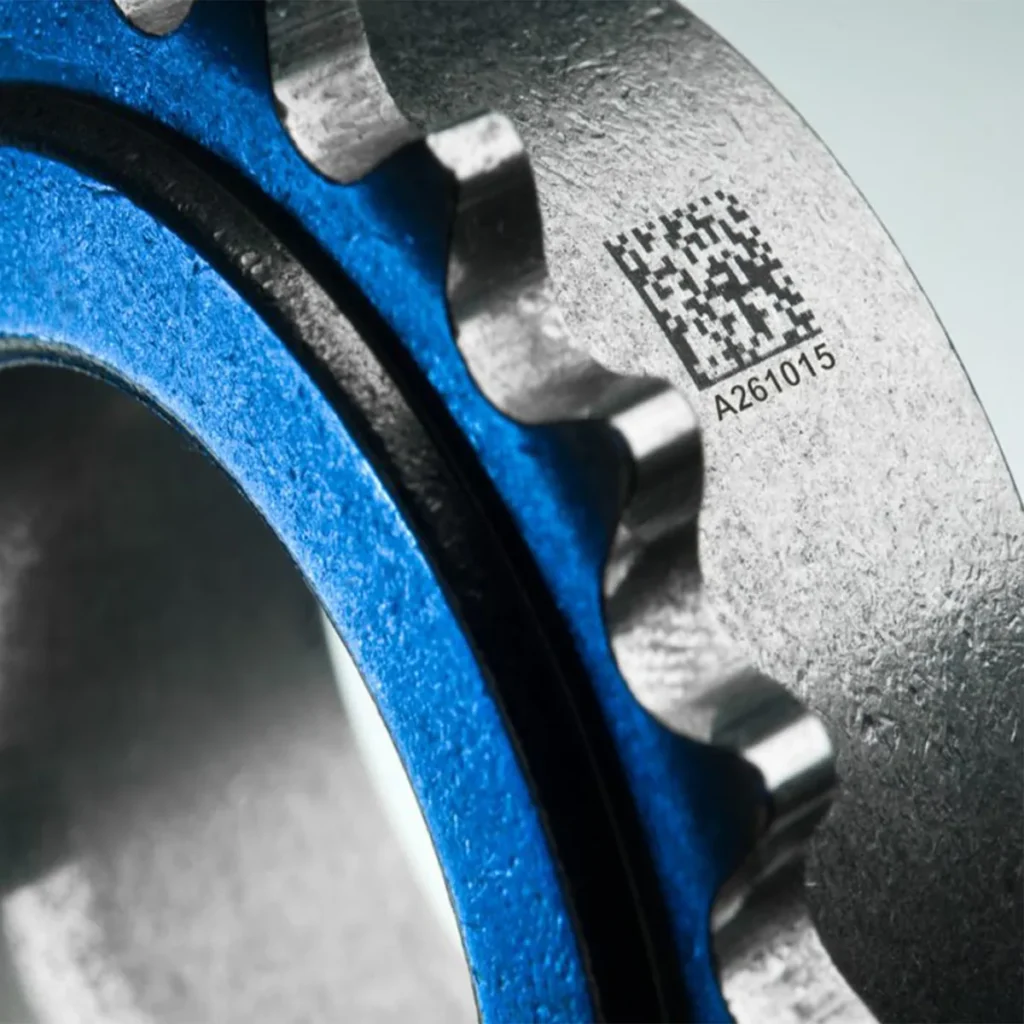
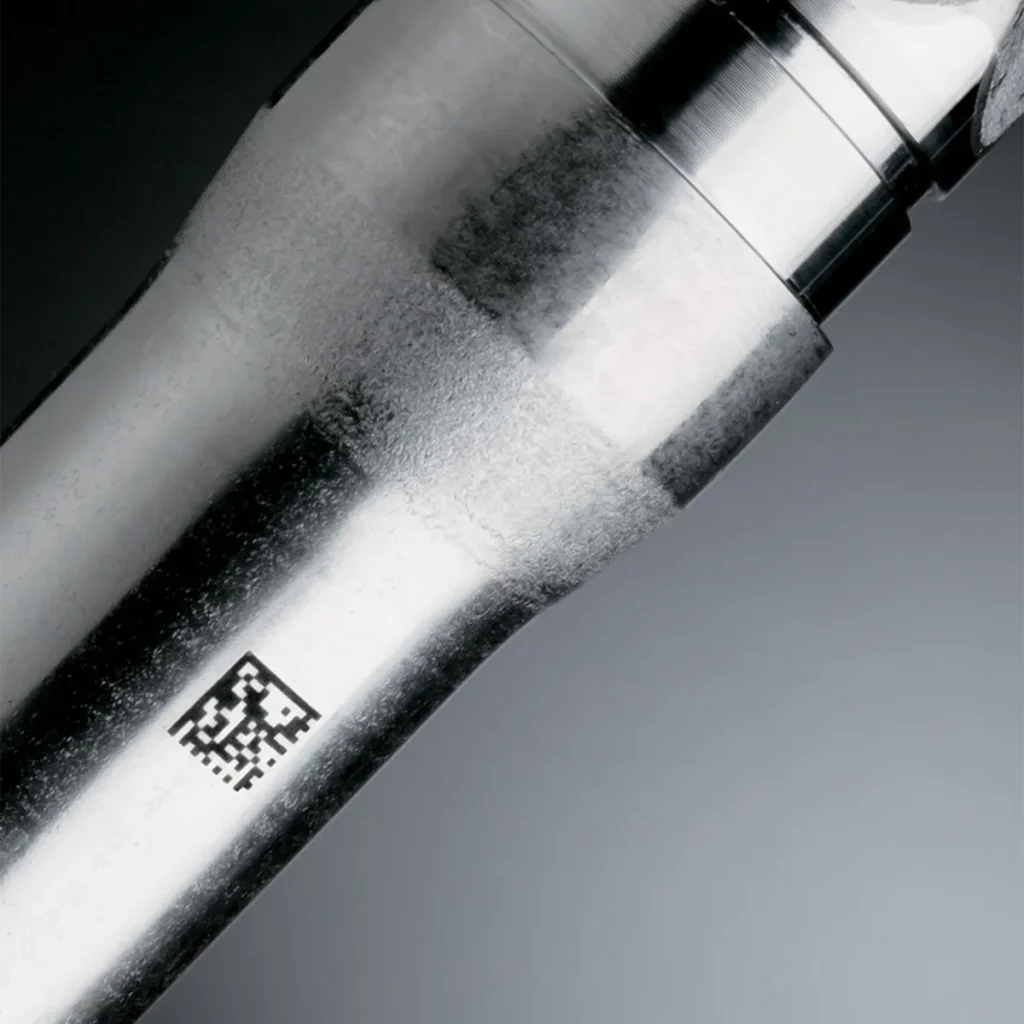
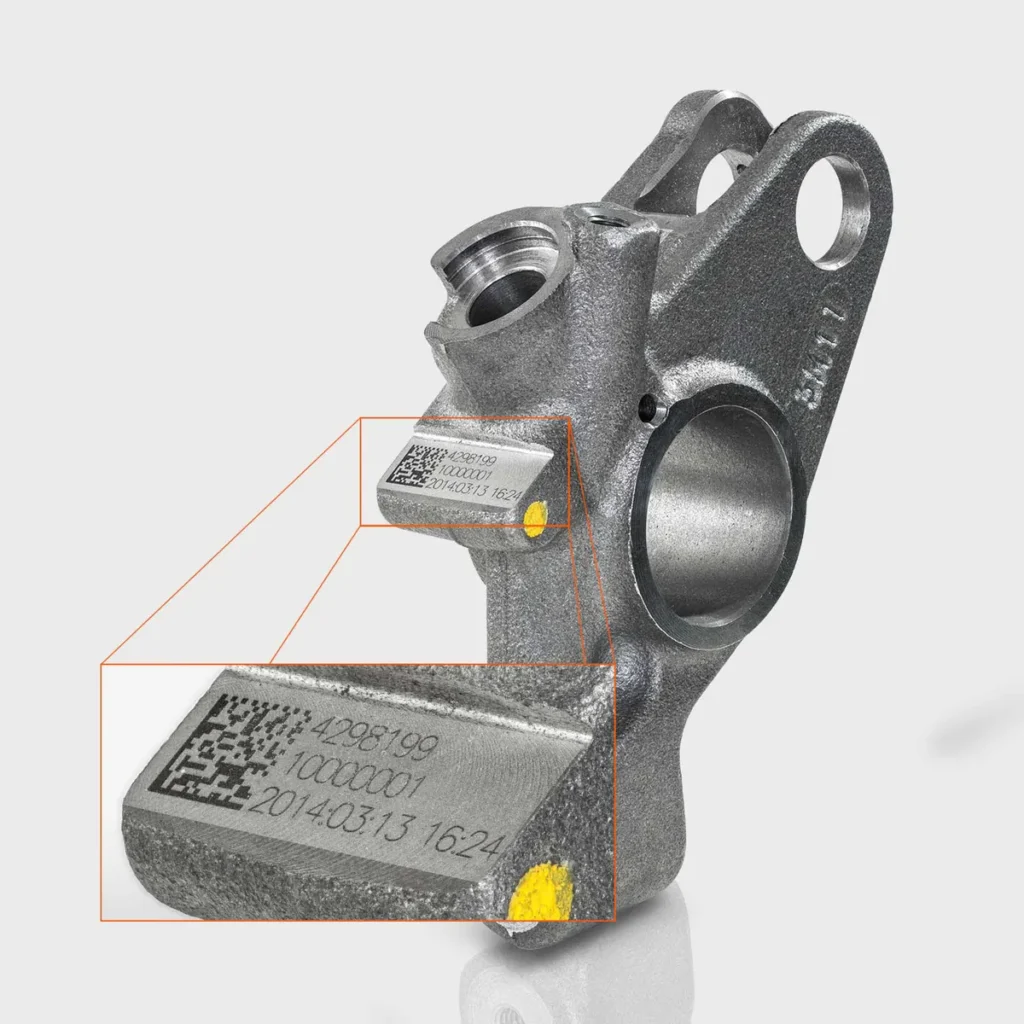
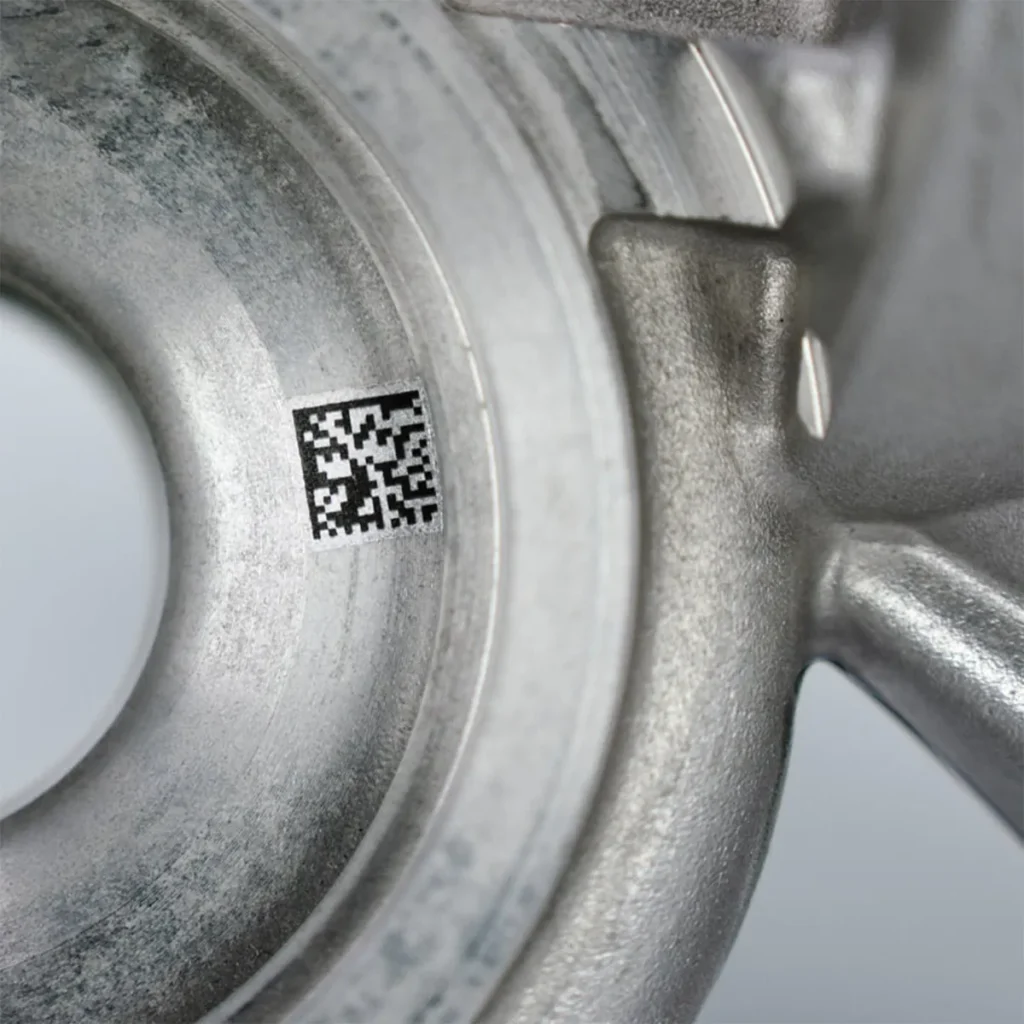
Cast aluminium parts
DataMatrix codes and serial numbers after machining.
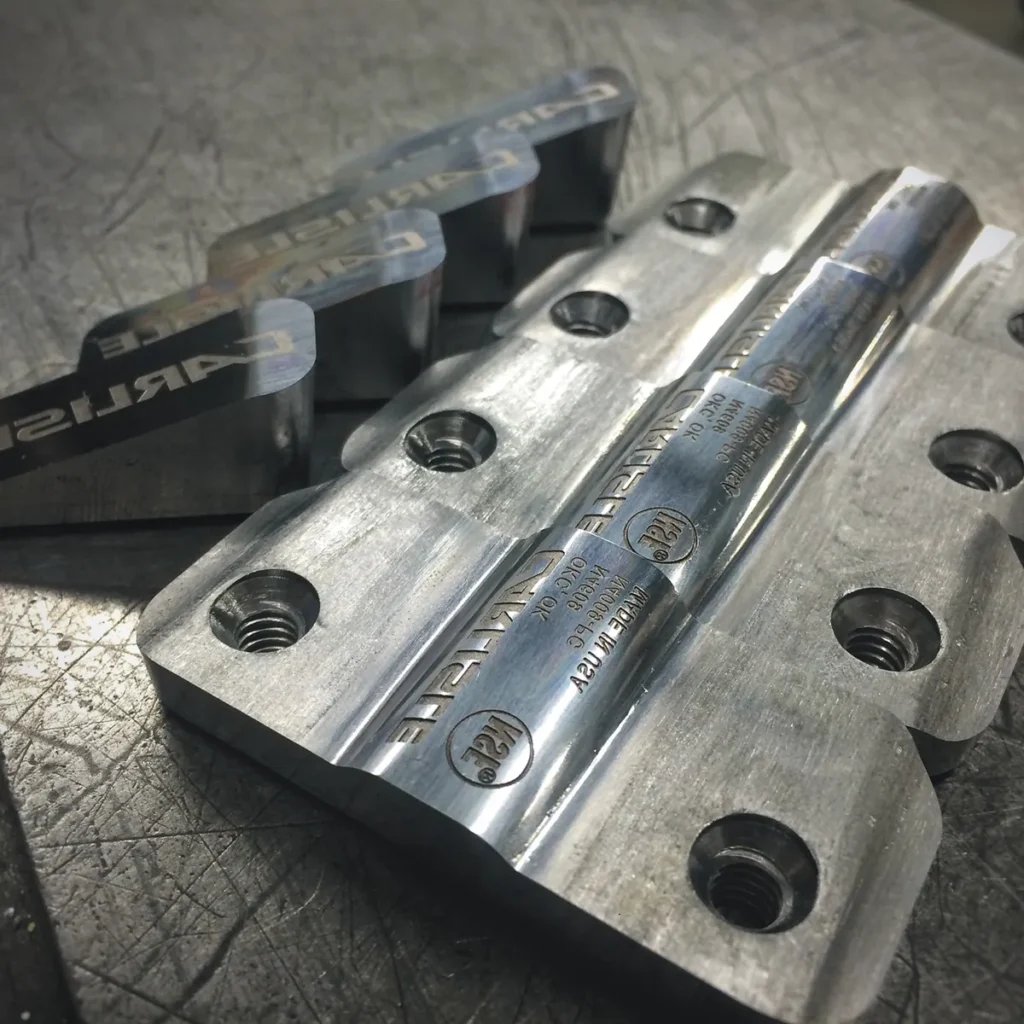
Moulds and tooling
Durable identification of moulds, pattern plates and tooling.
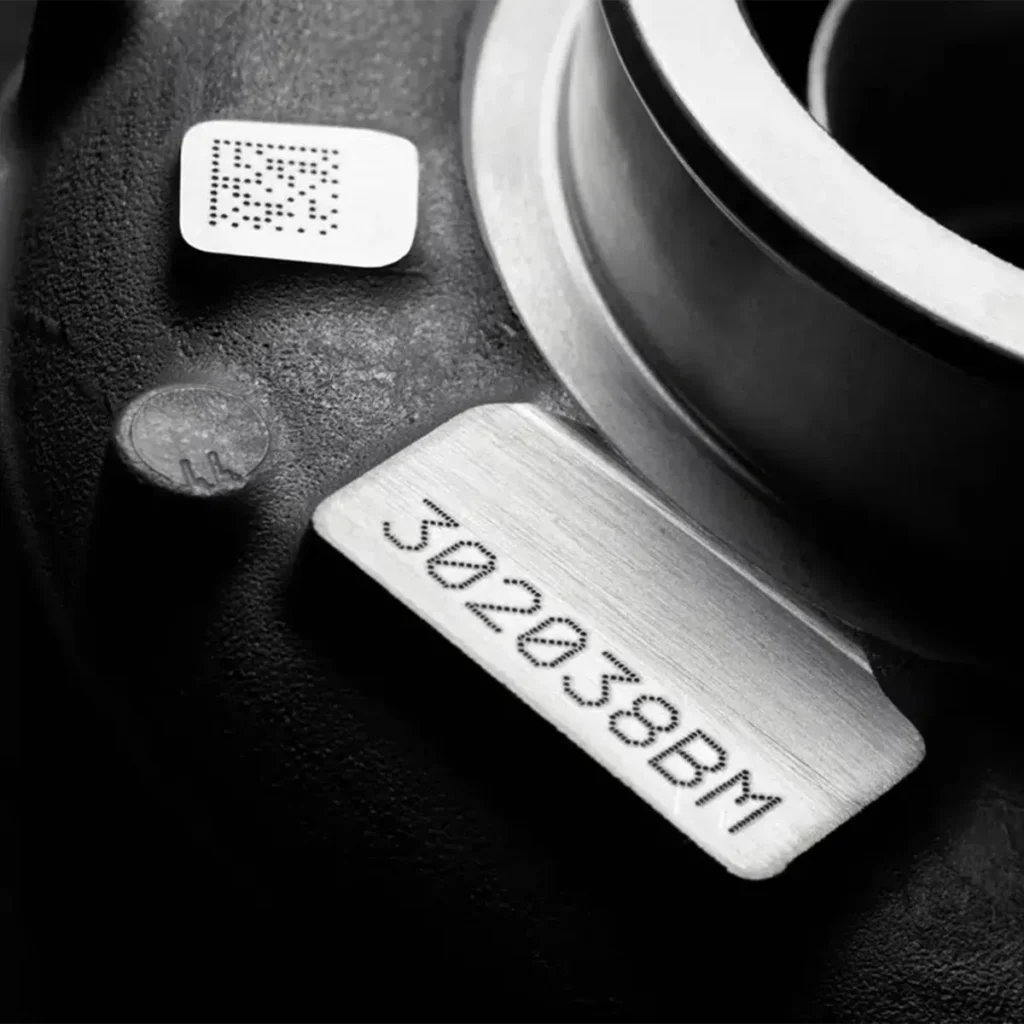
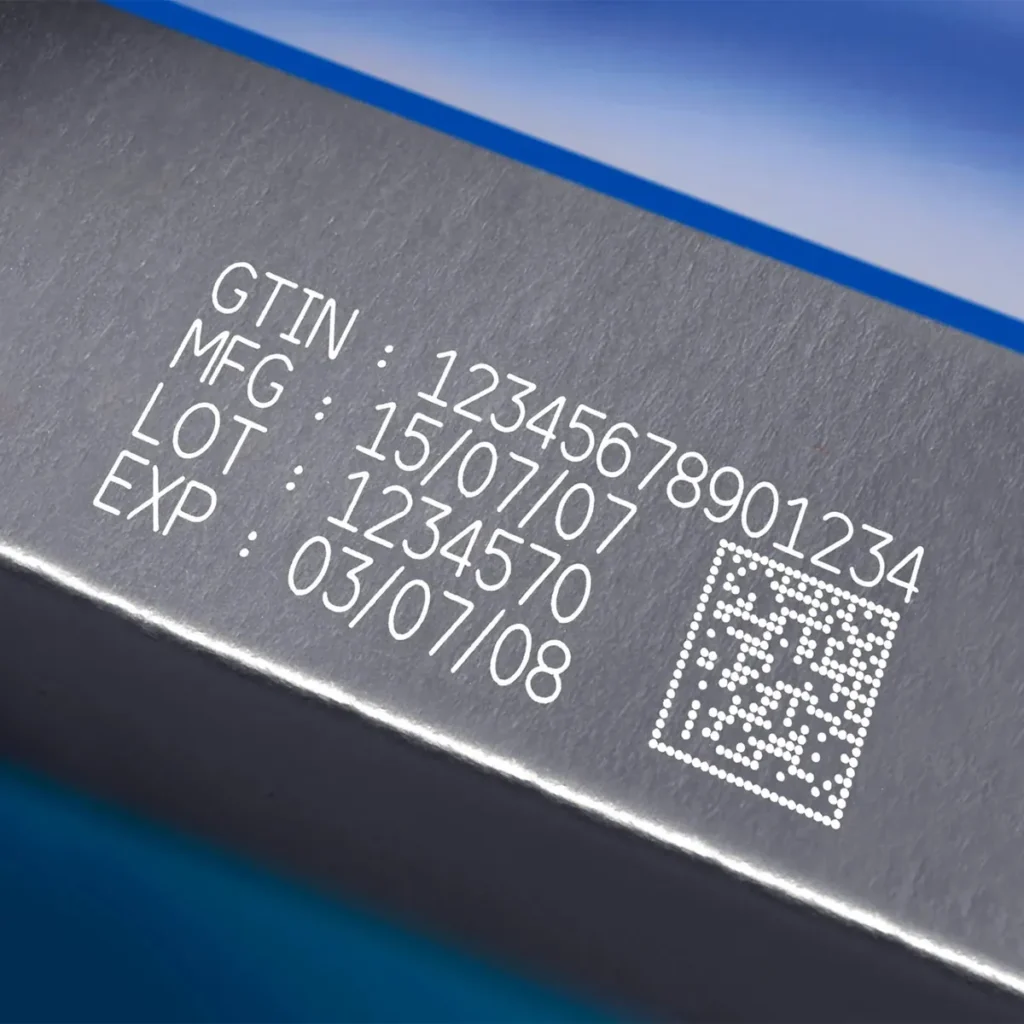
Ingots and batches
Batch marking for material tracking and logistics.
Thermoflan, your marking partner for foundries
For 60 years, Thermoflan has supported industrial companies in choosing, installing and monitoring their marking equipment. We run trials on your raw or machined parts and advise you on the most relevant step at which to mark.
Frequently asked questions about foundry marking
Can a raw casting be marked?
Yes, by deep fibre laser engraving. Roughness does limit contrast, however: for machine-read codes, it is often better to mark after shot blasting or machining.
Does the marking withstand shot blasting?
A sufficiently deep engraving remains readable after shot blasting. The required depth is determined by trials, depending on the material and the intensity of the treatment.
Can DataMatrix codes be marked on cast iron?
Yes, on a prepared surface (shot blasted or machined). Module size and contrast are adjusted to ensure readability.
How do you mark very heavy parts?
A portable fibre laser system lets you mark the part directly at the workstation, without moving it to a fixed machine.
Can Thermoflan run trials on our parts?
Yes. Send us samples at different manufacturing stages: we test the parameters and recommend the best step at which to mark.