







View all news
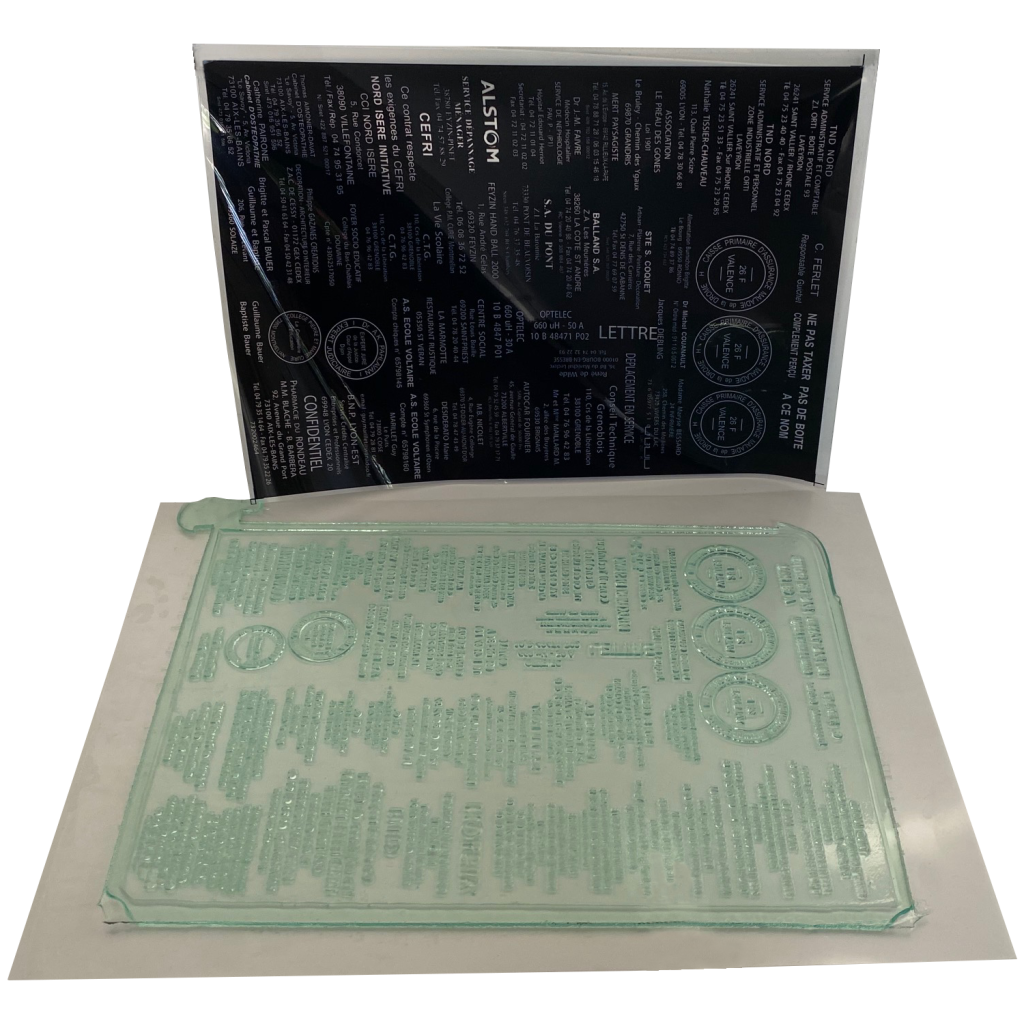
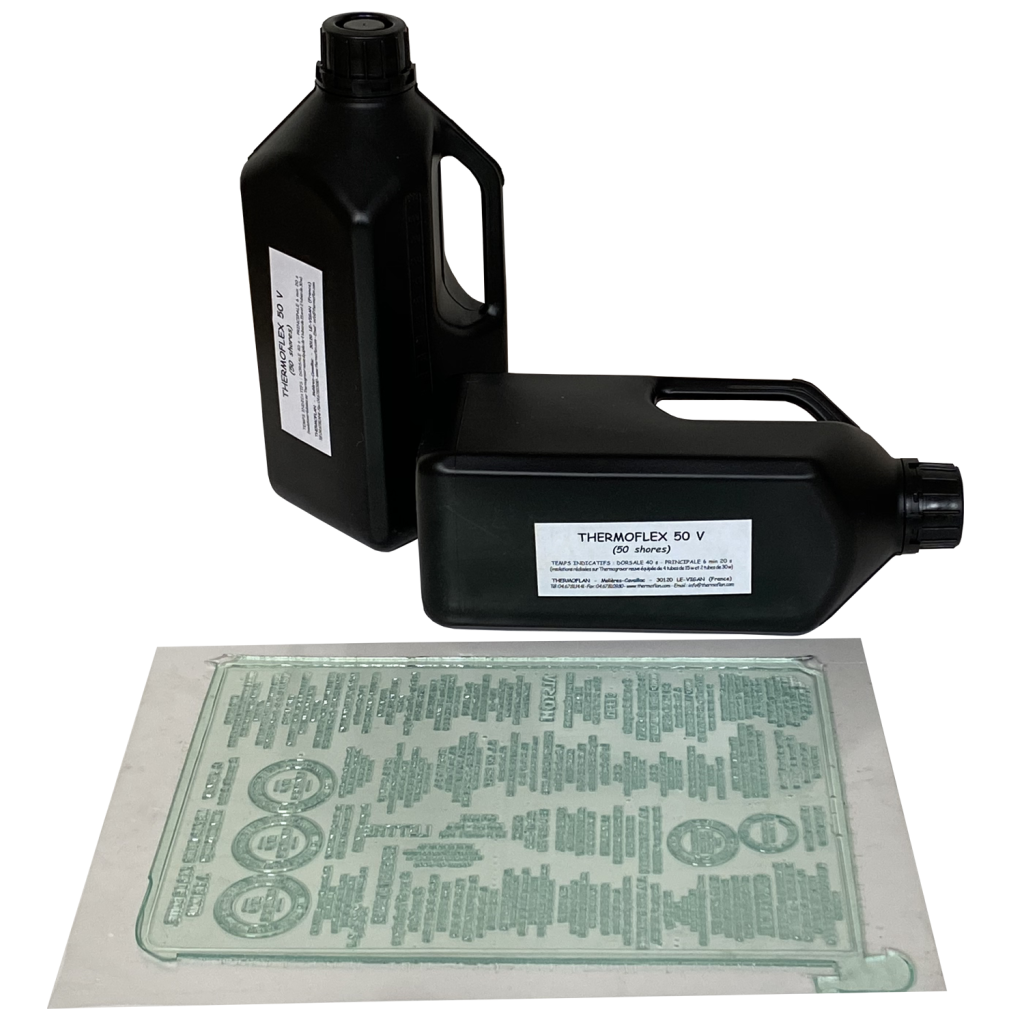
Resin stamps
From: 3225 €
For many years, Thermoflan has established itself as a specialist in consumables and equipment for resin stamp manufacturing.
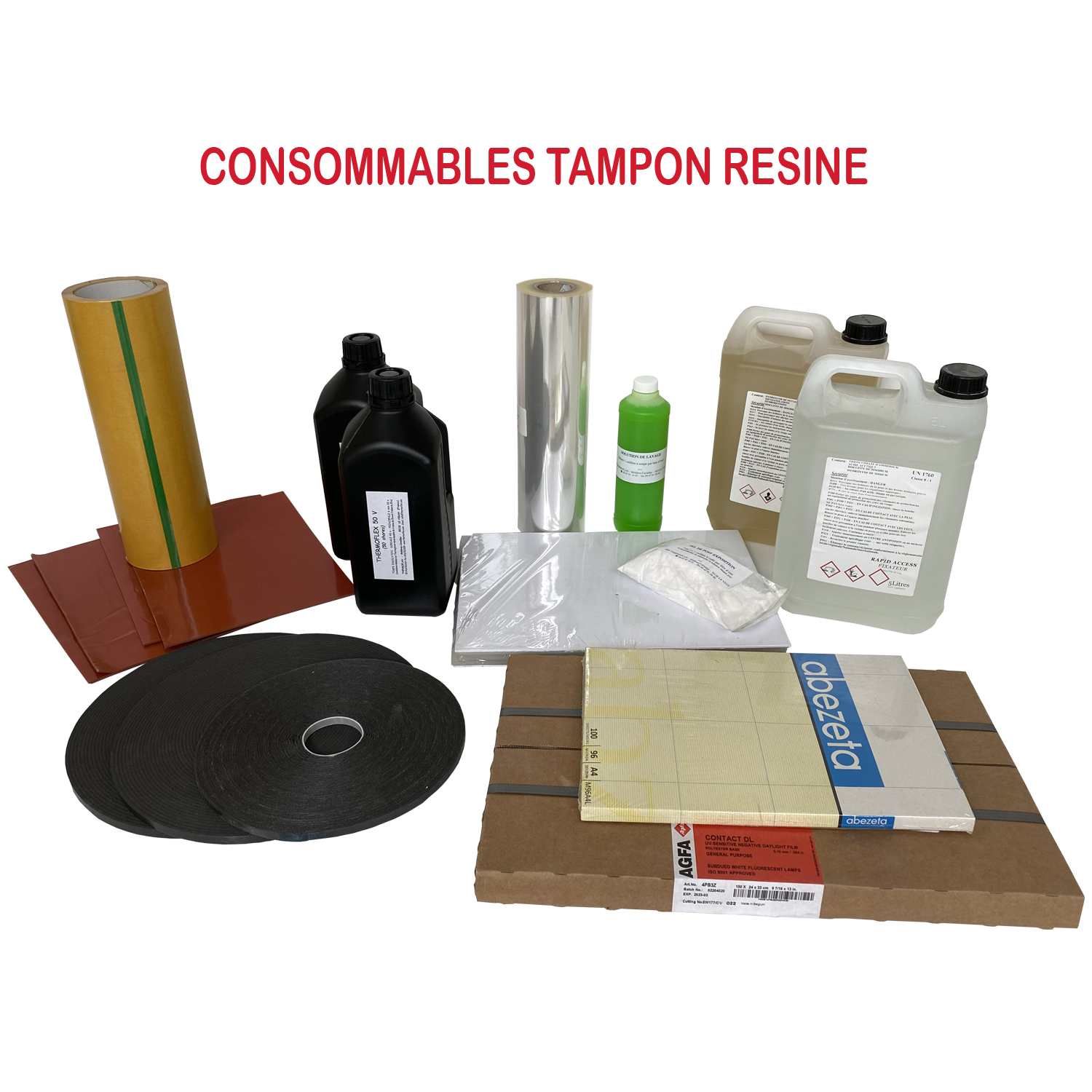
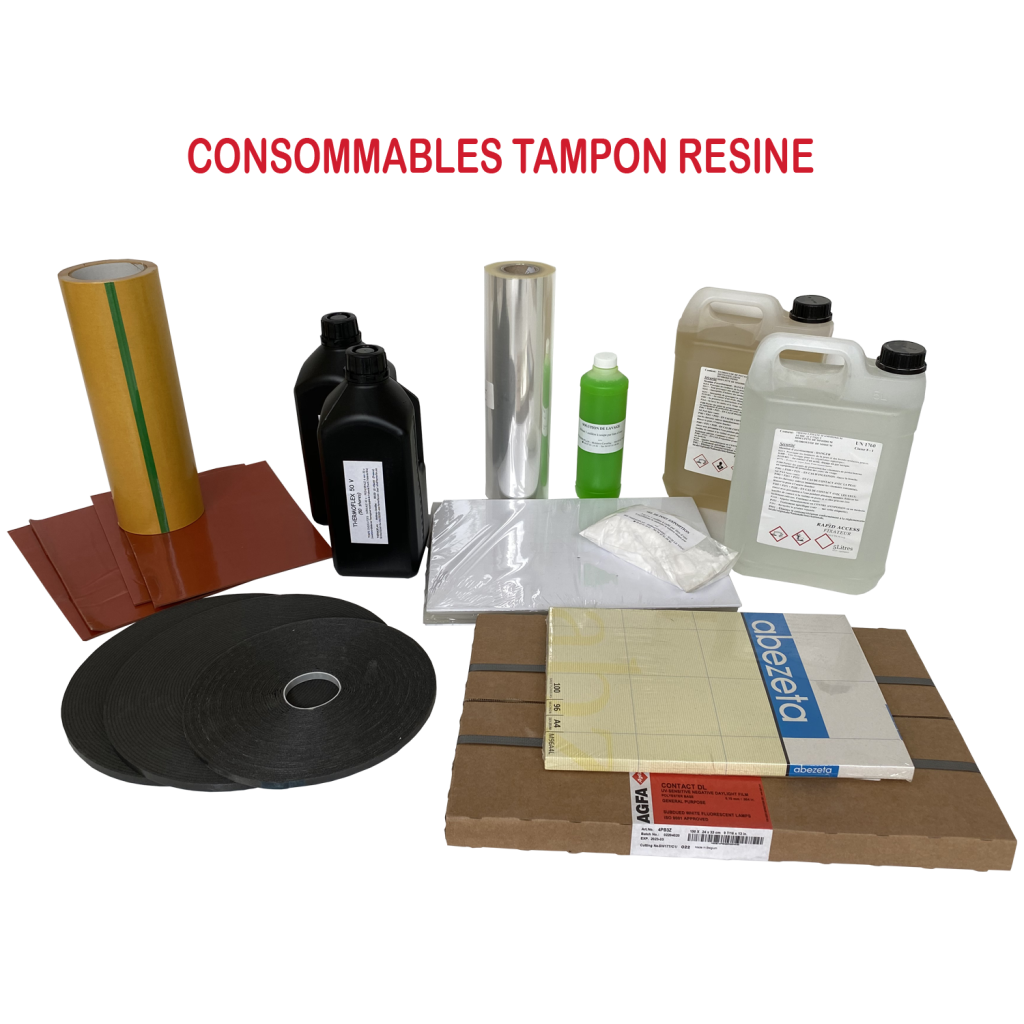
Explore our full range of products : photosensitive resin, base film, cover film, damming tape , wash-out solution, and our Thermogravor photopolymer machine, designed for high-quality stamp production.
Most of our products are developed and manufactured in-house, ensuring consistent quality and full control over every stage of production.
Number of colours:
Single color
Shape:
Relatively flat shape
Quantity:
Single
Materials:
Technical sheet
Production stage — Necessary products available from us
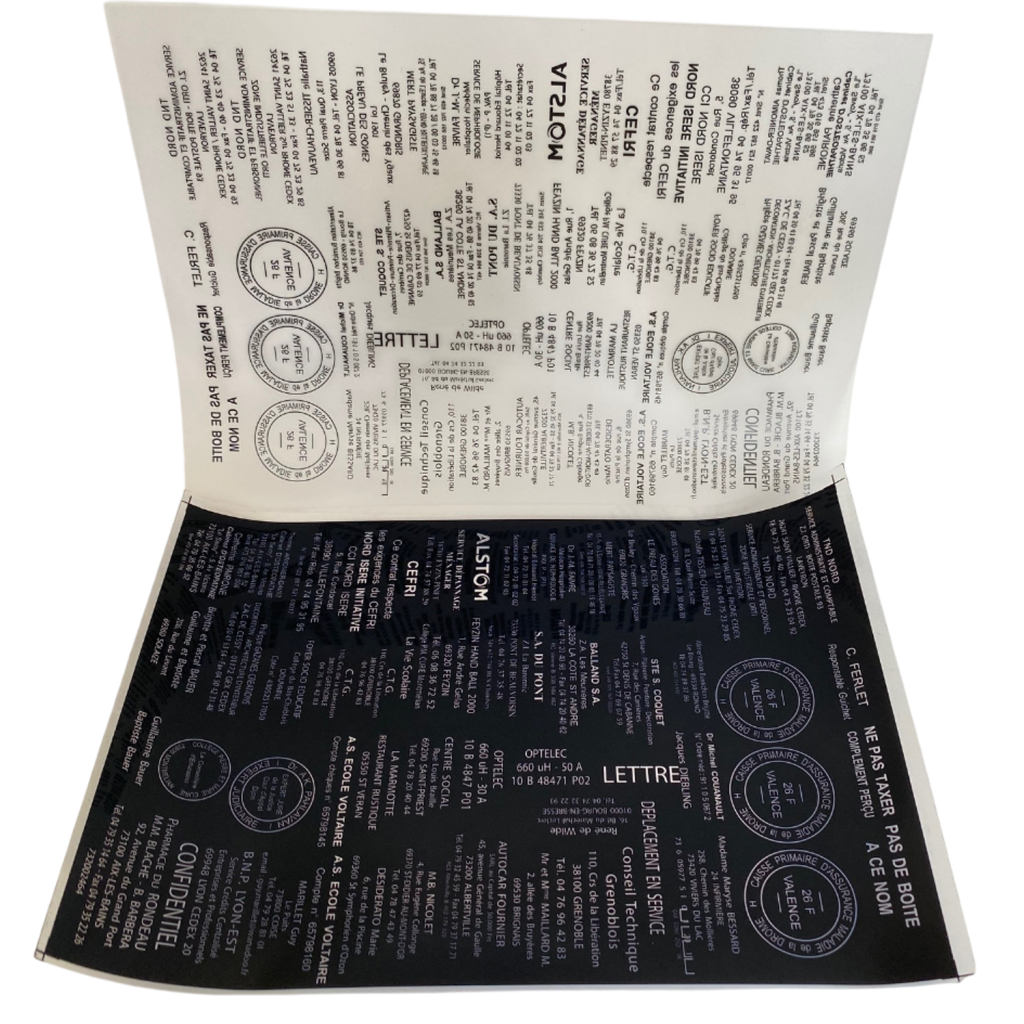
• Positive film
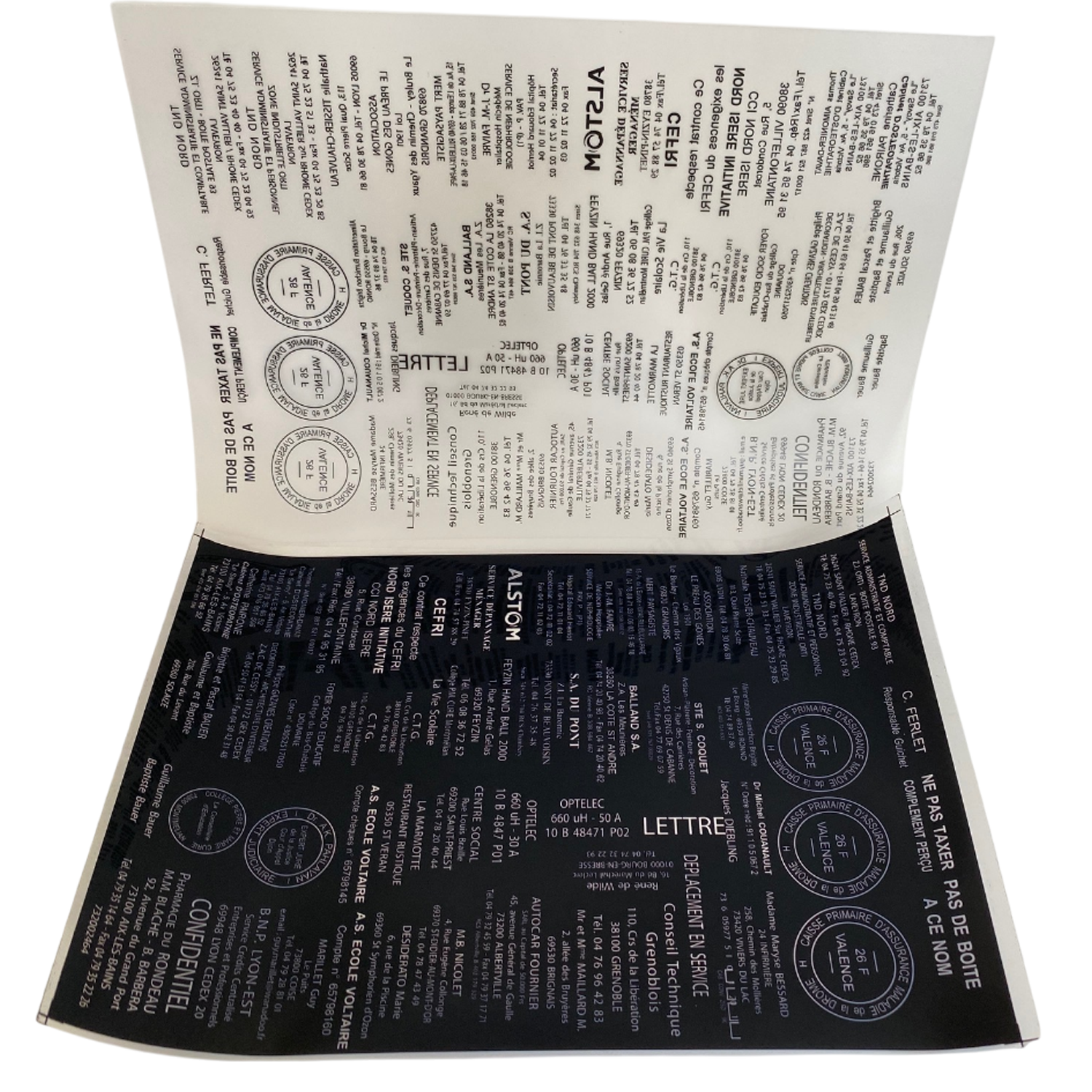
Support used for creating the positive. It can be printed using a laser or inkjet printer.
• Negative film
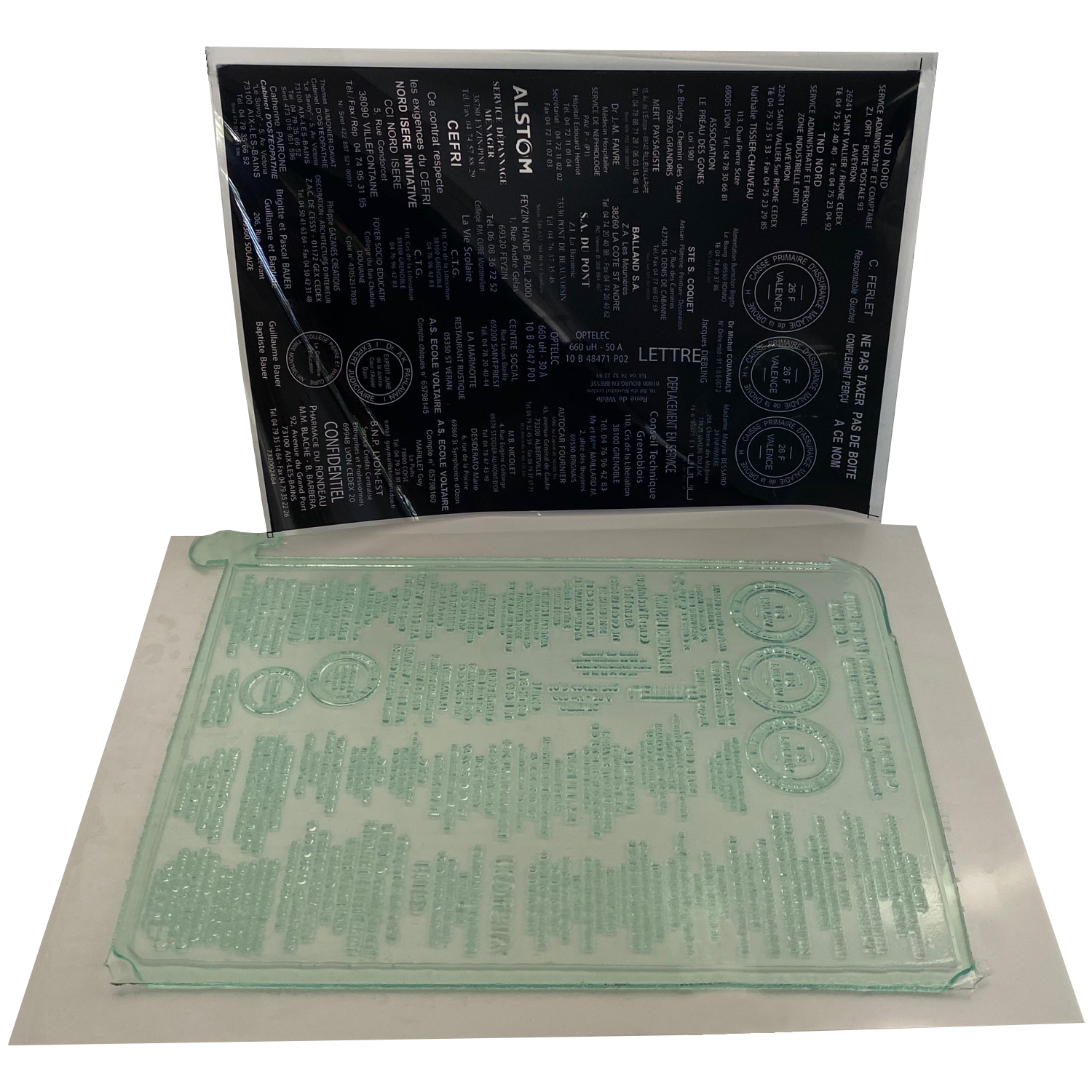
“Daylight” film exposed through the positive in the exposure area of the Thermogravor.
After exposure, it is developed in a developer bath and then fixed in a fixer bath to obtain the final negative film.
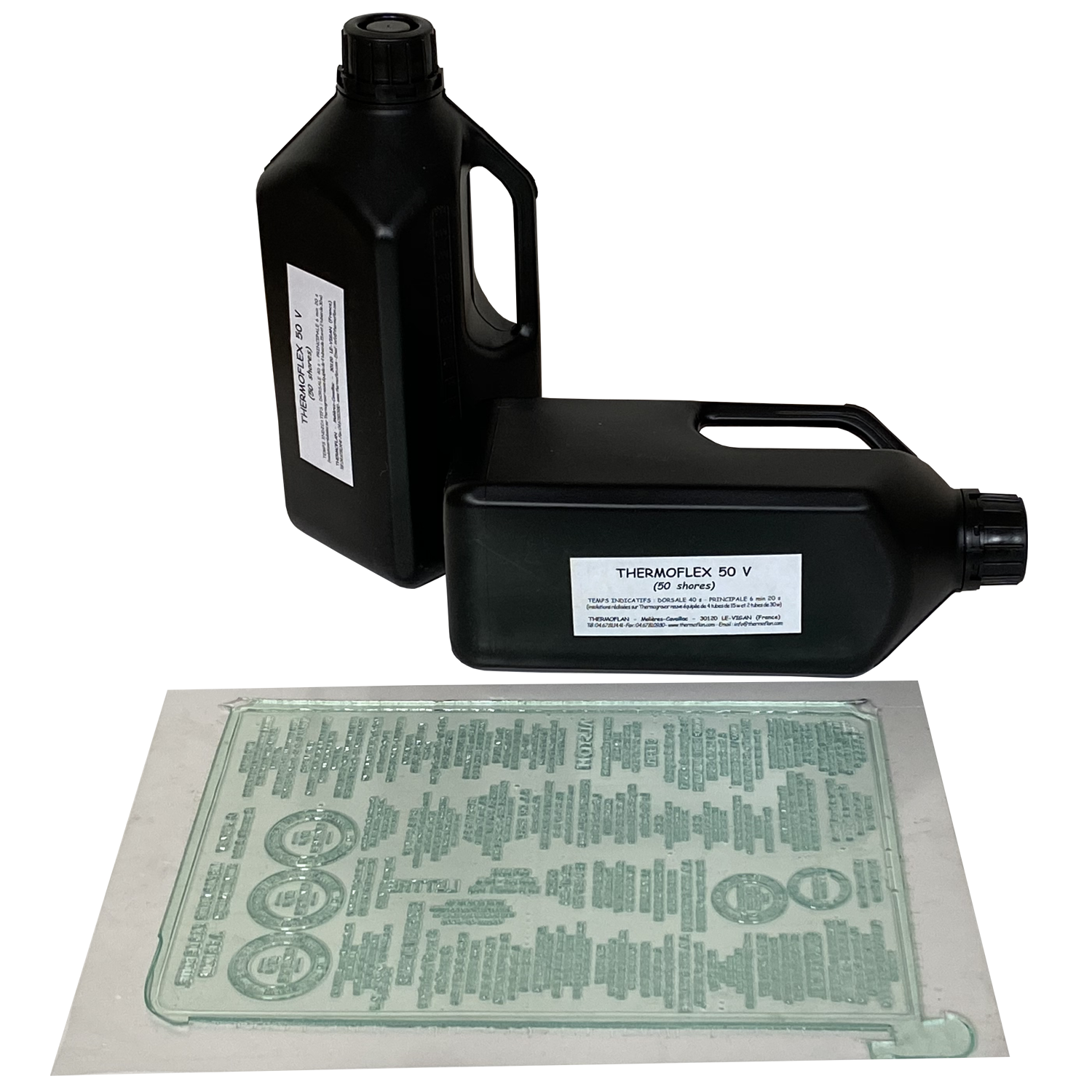
• Liquid photopolymer resin
Our photopolymer resin was developed in collaboration with Anvar and the National School of Chemistry of Montpellier.
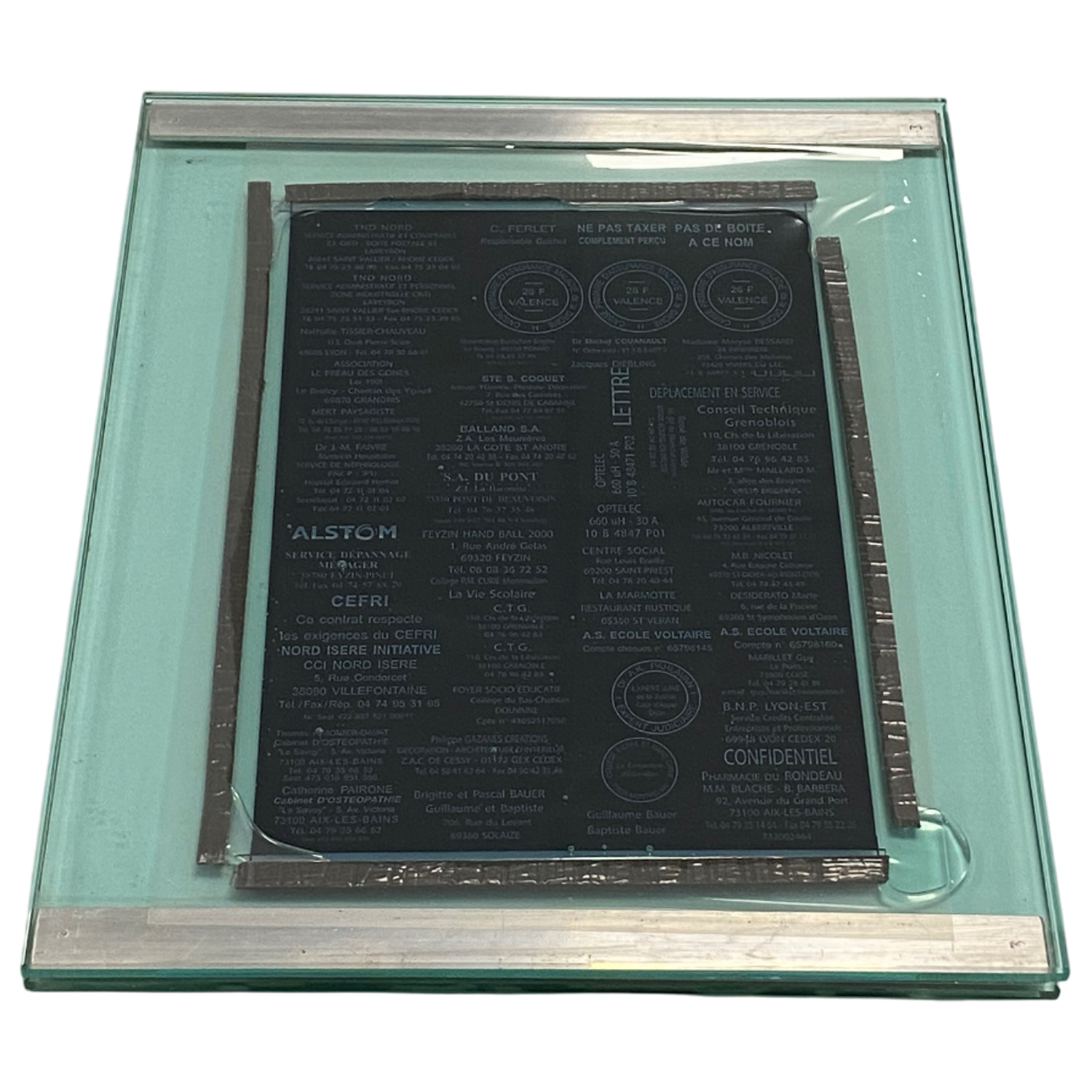
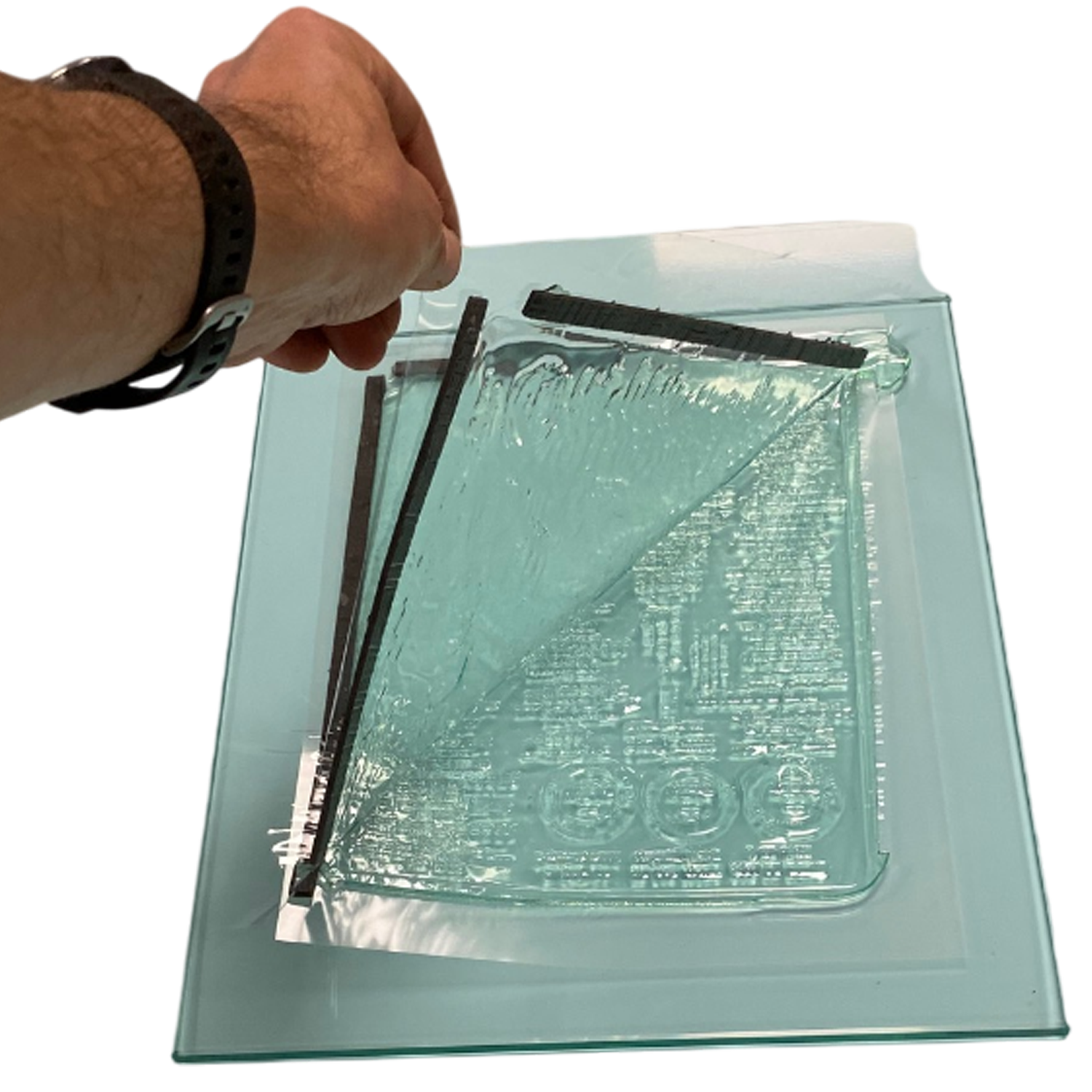
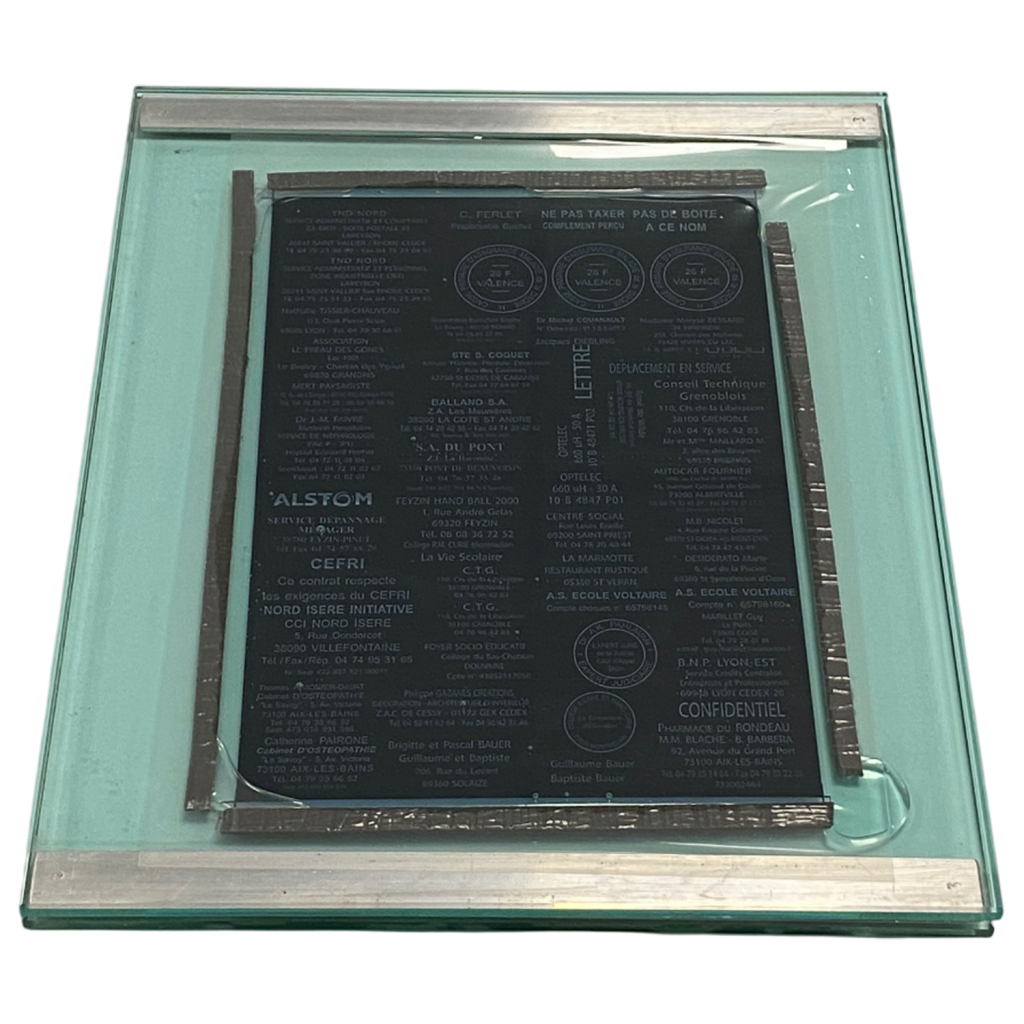
It is poured onto a cover film that protects the negative film, pouring area being defined by a damming tape.
The resin is then covered with a base film, which forms the stamp base and provides its rigidity.
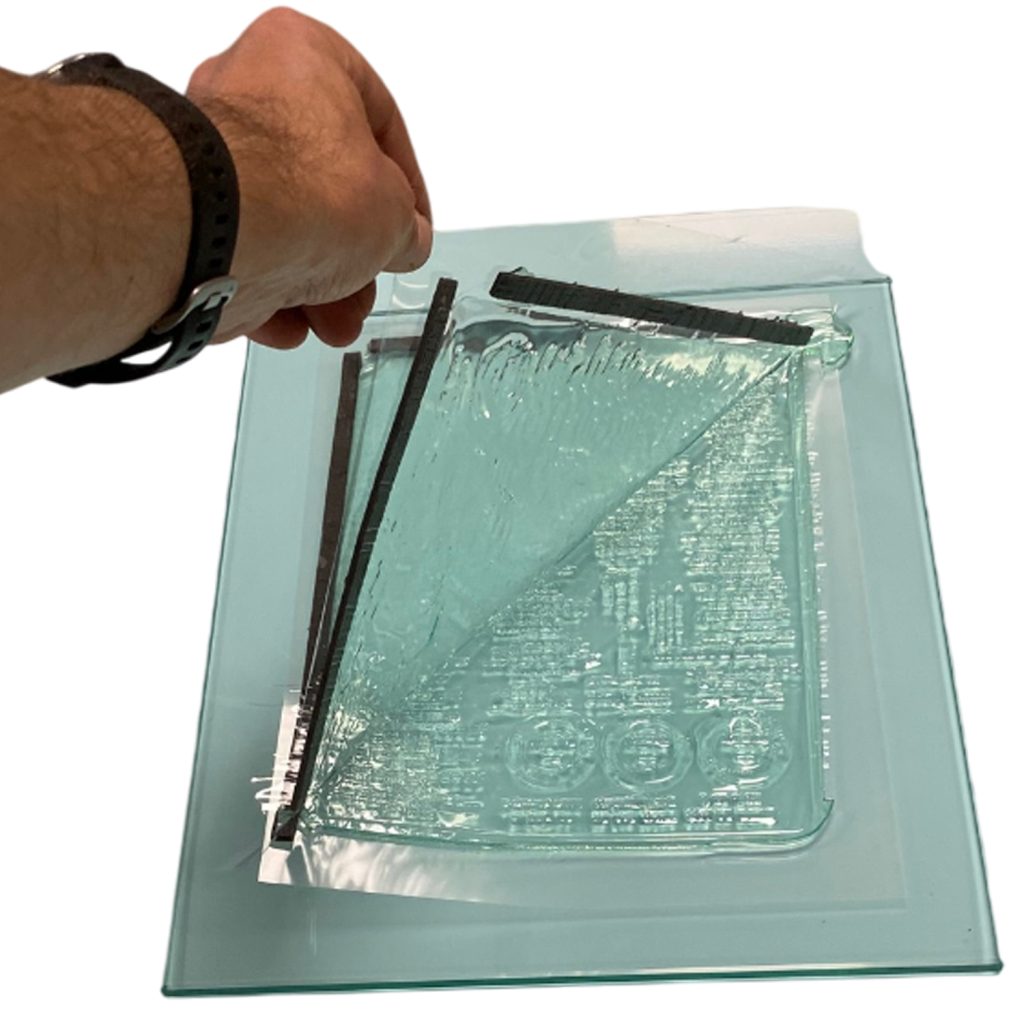
The assembly is UV-exposed through the negative film: exposed areas harden, while unexposed ones are removed by brushing in water mixed with washing solution.
Finally, the resin undergoes post-exposure in a bath containing an anti-tack treatment (post-exposure salt), eliminating any residual stickiness.
The thickness of the relief is determined by the choice of damming tape — 2 mm or 3 mm — depending on the desired result.
Features:
Liquid photopolymer resin
50 Shore hardness.
Available in 2 kg containers, and on request in 1 kg and 50 kg.
Positive film and daylight film
Daylight film is a photosensitive film that reacts to UV light, allowing the production of a negative film through a positive film (tracing paper) printed on an inkjet or laser printer.
The negative is exposed in the Thermogravor photopolymer machine and then developed (developer) and fixed (fixer) in trays.
Positive and daylight films are available in A4 format in packs of 100.
Cover film
The cover film protects the negative film prior to resin application.
Available in 315 mm wide rolls, 180 m in length.
Damming tape
The damming tape defines the area into which the resin is poured.
Available in 20-meter rolls in two thicknesses: 2 mm for stamp pens and 3 mm for standard stamps.
Base film
The base film provides rigidity to the stamp by forming a thin layer onto which the resin is polymerized.
Size : 360 x 250 mm — available in packs of 100 sheets.
Post-exposure salt
The post-exposure salt eliminates the tackiness of the resin during post-exposure treatment.
Available in 500 g bags, sufficient to prepare 80 liters of solution.
Washing solution
The washing solution ensures thorough cleaning of the resin during the engraving process in the photopolymer machine.
Available in 500 ml bottles, sufficient to prepare 50 liters of solution.
Accessories available with this product

Thermogravor
FAQ on Resin stamps
What is a Marking Stamp?
A marking stamp, also known as a seal or rubber stamp, is a manual or automatic instrument used to mark and print a pattern on various types of media.
Its flexibility of use allows it to effectively meet two major areas of application:
Administrative and professional context
- Authentication of official documents (company seal).
- Dating documents (date stamps).
- Repetitive notations in accounting, secretarial, or logistics work.
- Cancellation and document tracking.
Creative and hobby context
- Used in stationery and scrapbooking.
- Decoration of invitations and greeting cards.
- Packaging and label customization.
- Creation of unique and decorative materials.
A traditional stamp consists of three essential elements that ensure its operation:
- The ink pad: a felt pad or cartridge soaked in ink.
- The die (or impression): the engraved relief part containing the text or logo, made of rubber or polymer resin.
- The mount (or handle): an ergonomic support ensuring grip and marking pressure.
Choosing the right ink depends primarily on the material to be marked and the conditions of use:
- Standard inks for paper.
- Fast-drying or alcohol-based inks for non-porous surfaces (plastic, metal, glass).
- Specific inks for textiles, resistant to washing.
- Technical inks for industrial applications or demanding outdoor conditions.
How does a Marking Stamp work?
A marking stamp allows ink to be transferred onto a substrate to reproduce text, a logo, a number, or any other visual quickly and repeatably.
Regardless of the system used, the principle remains the same: a pattern is loaded with ink and then applied by pressure onto the surface to be marked.
A stamp marking system generally relies on three essential elements:
- The pattern carrier
This is the element that contains the visual to be reproduced (text, logo, numbering, symbol, etc.). - The inking system
It provides ink to the pattern before each impression. Depending on the technology used, the ink can be integrated directly into the stamp or applied via a separate ink pad. - The application mechanism
It ensures contact between the stamp and the substrate to obtain a clean and consistent marking.
Depending on production needs and the substrates to be marked, there are several marker stamp technologies available :
- Rubber
- Photopolymer resin
- Pre-inked version
Operation of the different types of stamps:
Rubber or photopolymer resin stamps
- The stamp is impregnated with the ink contained in the ink pad
- It is then applied to the substrate to be marked to transfer the ink
- A new ink application is required for each impression
Pre-inked stamps
- The ink is integrated directly into the material
- It is stored in a microporous structure composed of ink microcapsules
- Marking is performed without prior external inking
How is a stamp manufactured?
Manufacturing a rubber stamp involves creating a surface capable of reproducing a visual (text, logo, number, or symbol) and then integrating it into an inking system.
The manufacturing process takes place in 4 steps and applies equally to resin stamps, traditional rubber stamps, and pre-inked models.
- Graphic design
Texts, logos, and layouts are created or adjusted on a computer using DTP software to prepare the final visual. - Negative exposure
The visual is printed on a high-density transparent film to create a perfect negative.
The areas intended for marking remain transparent while the background becomes completely black and opaque. - Creating the relief (the cliché)
The negative film is exposed to UV rays in an exposure machine.
The light passes through the transparent areas and hardens the photosensitive material.
This results in:
– either the final stamp directly (in the case of resin stamps);
– or a relief cliché (hard photopolymer) serving as a master template. - Final molding (for rubber and pre-inked)
The relief cliché is hot-pressed into a matrix to create a reusable recessed mold.
This matrix then allows for:
– pressing and vulcanizing traditional rubber;
– or gelling the specific ink used to manufacture pre-inked stamps.
Resin Stamp or Rubber Stamp: which one to choose?
There are several technologies available for manufacturing a marking stamp. The two main families are the Resin Stamp (photopolymer) and the Rubber Stamp, which is produced either by laser engraving or by the traditional molding method. Each process offers advantages depending on the production volume, budget, and level of performance required.
Resin Stamp (Photopolymer)
Resin is a solution particularly appreciated for its simplicity of manufacturing and its low investment cost.
Advantages:
- rapid manufacturing: approximately 25 minutes for the complete cycle;
- compact footprint: the entire process is centralized in a compact machine;
- affordable investment and low cost price;
- ideal solution for starting a business.
Disadvantages:
- marking quality is more standard than rubber;
- less efficient ink transfer;
- low resistance to specific inks, particularly alcohol-based ones;
- more limited durability over time.
Rubber Stamp (Laser and traditional method)
Rubber remains the premium solution for demanding applications.
Common advantages
- excellent ink rendering thanks to the material structure;
- high chemical resistance;
- compatible with specific inks;
- very high wear resistance;
- long service life.
Laser-manufactured rubber
The laser is particularly suitable for the rapid manufacturing of individual parts.
Advantages:
- extremely fast manufacturing for a single stamp (approx. 3 min 30);
- great flexibility for unit orders.
Disadvantages:
- high investment in laser equipment;
- significant production time for large series;
- high dust production requiring regular maintenance;
- no economies of scale on reprints.
Rubber manufactured by traditional method
Traditional manufacturing remains the benchmark for repetitive production.
Advantages:
- lower investment than a laser system;
- excellent profitability for production runs;
- once the mold is created, reprints are very fast and economical.
Disadvantage:
- longer startup time to create the first mold (approximately 1 hr 10 min for an A4 sheet).
In summary:
- Resin → ideal for starting quickly with a low investment.
- Laser rubber → perfect for quick, one-off productions.
- Traditional rubber → the most cost-effective solution for series production.
What are the manufacturing lead times and production costs for Rubber and Resin Stamps?
The table below summarizes the characteristics of the 3 types of stamps:
RESIN STAMP | TRADITIONAL RUBBER STAMP | LASER RUBBER STAMP | |
| Production time For an A4 format (40 stamps) | 30 minutes (excluding composition) | 1 hour 15 minutes (excluding composition) | From 2 h 30 min (30 W power) To 45 min (100 W power) |
| Production time For a single stamp | 30 minutes (excluding composition) | 1 hour 15 minutes (excluding composition) | From 4 min (30 W power) To 1 min (100 W power) |
| Production time For reprinting an A4 format | 30 minutes | 6-5 minutes (only the rubber needs molding) | From 2 H 30 (30 W power) To 45 min (100 W power) |
| Unit cost price* for a stamp (based on 40 stamps /A4) | 0.29 € | 0.72 € | 0.19 € |
Unit cost price* for a reprint Price of the first stamp Price of subsequent copies |
0.29 € 0.29 € |
0.72 € 0.07 € | 0.19 € 0.19 € |
| *Excluding labor and equipment depreciation | |||
In conclusion:
- Resin requires a low investment and is relatively economical and fast.
- Traditional stamping is very attractive as soon as manufacturing involves high volumes and frequent reprints (e.g., scrapbooking)
- The laser is attractive for its speed on small quantities, or requires a significant investment (100W power) for larger quantities. It is important not to overlook the maintenance costs of laser equipment in this business.
What equipment is required for the production of Resin Stamps?
Photopolymer resin stamps offer simple, fast, and cost-effective production with minimal equipment investment.
Required equipment
The complete process relies on only two elements:
- An office printer: A simple inkjet or laser printer is sufficient to print the initial transparency (the positive).
- Une machine combinée tout-en-un (Gamme Thermogravor) : Conçu et développé par Thermoflan, cet équipement unique centralise à lui seul l’intégralité des opérations de transformation de la résine. Très compacte et simple d’utilisation, la Thermogravor permet de produire des tampons jusqu’au format A4 grâce à ses trois zones techniques intégrées : insolation, gravure et séchage.
Les étapes de fabrication avec la Thermogravor
Grâce à cette configuration tout-en-un, l’opérateur enchaîne les étapes de production au même endroit :
- Negative preparation: Exposure of the negative from the positive film in the machine’s exposure area, followed by rapid development and fixing in a plastic tray.
- Resin exposure: Exposure of the flexible resin (such as Thermoflex 50 V) in the dedicated exposure area.
- Etching: Removal of the unexposed resin in the Thermogravor’s etching area.
- Post-exposure: A quick second pass in the exposure area to stabilize and permanently set the mechanical properties of the resin.
- Drying: Final pass through the drying zone to obtain a dry, non-sticky stamp that is immediately ready for use.
What makes our Thermoflex 50 V resin stand out?
Developed in collaboration with ANVAR and the National School of Chemistry of Montpellier, the Thermoflex 50 V photopolymer resin is specially designed for the direct manufacturing of resin stamps.
Available in several hardness levels, it disrupts market standards by offering an unprecedented price-to-quality ratio in the stamp sector.
Its technical characteristics and advantages are evident at every stage, from handling to final use:
Work comfort and safety
- Safe formulation: Unlike many competing resins, Thermoflex 50 V does not require toxicity labeling (such as the “Red Cross”). Therefore, it does not require any restrictive handling precautions for the operator.
- Odorless: It ensures a pleasant working environment due to the complete absence of odor during handling.
Manufacturing performance
- Optimized washing and engraving: The resin dissolves and breaks down perfectly in the washing solution, ensuring smooth and clean engraving.
- Maximum adhesion: It guarantees a perfect and durable hold on the base film.
- Integrated anti-tack treatment: Its formulation includes an anti-stick agent that eliminates the “tack” effect after manufacturing, making it easier to handle the finished pad.
- Visual appearance: Its transparent green tint allows for immediate and qualitative visual inspection of the pad.
Print quality and durability
- Fineness and ink transfer: Thanks to excellent elasticity, it reproduces engraving definition with very high precision for a final marking that is sharp, clean, and smudge-free.
- Preservation of ink pads (Major innovation): Unlike most resins on the market, Thermoflex 50 V does not absorb the water contained in inks. This prevents the premature drying of automatic ink cartridges or manual ink pads, extending their service life.
- High wear resistance: The perfect combination of its hardness and flexibility gives it excellent abrasion resistance and remarkable longevity.
- UV stability: The material does not undergo any alteration or premature aging when exposed to light or UV rays.
What is an ink stamp used for?
The 4 main areas of application for ink stamps:
Corporate and administrative field
- A daily tool for companies and administrations for authenticating official documents
- Used on commercial documents: quotes, contracts, delivery slips
- Complements dates and signatures on documents
- Also includes daters and numberers
Scrapbooking and creative stationery
- Used for personalizing handmade creations: albums, announcements, invitations
- Allows for the creation of numerous visual and decorative effects
- Compatible with various accessories: metallic inks, multicolor inks, embossing powders for relief effects
Textile marking
- Used for marking clothing and textiles
- Specific inks resistant to repeated washing
- Good durability over time without degradation of the mark
Industrial and technical solutions
- Meets demanding technical specifications
- UV inks for outdoor resistance and environmental constraints
- Acid inks for etching and traceability (e.g., marking on glass, light bulbs, technical parts)
THERMOFLAN advantages
Over 60 years of experience
Permanent stock
Best quality/price ratio
Technical availability
Ask our experts for advice
How can we help you?