






View all news
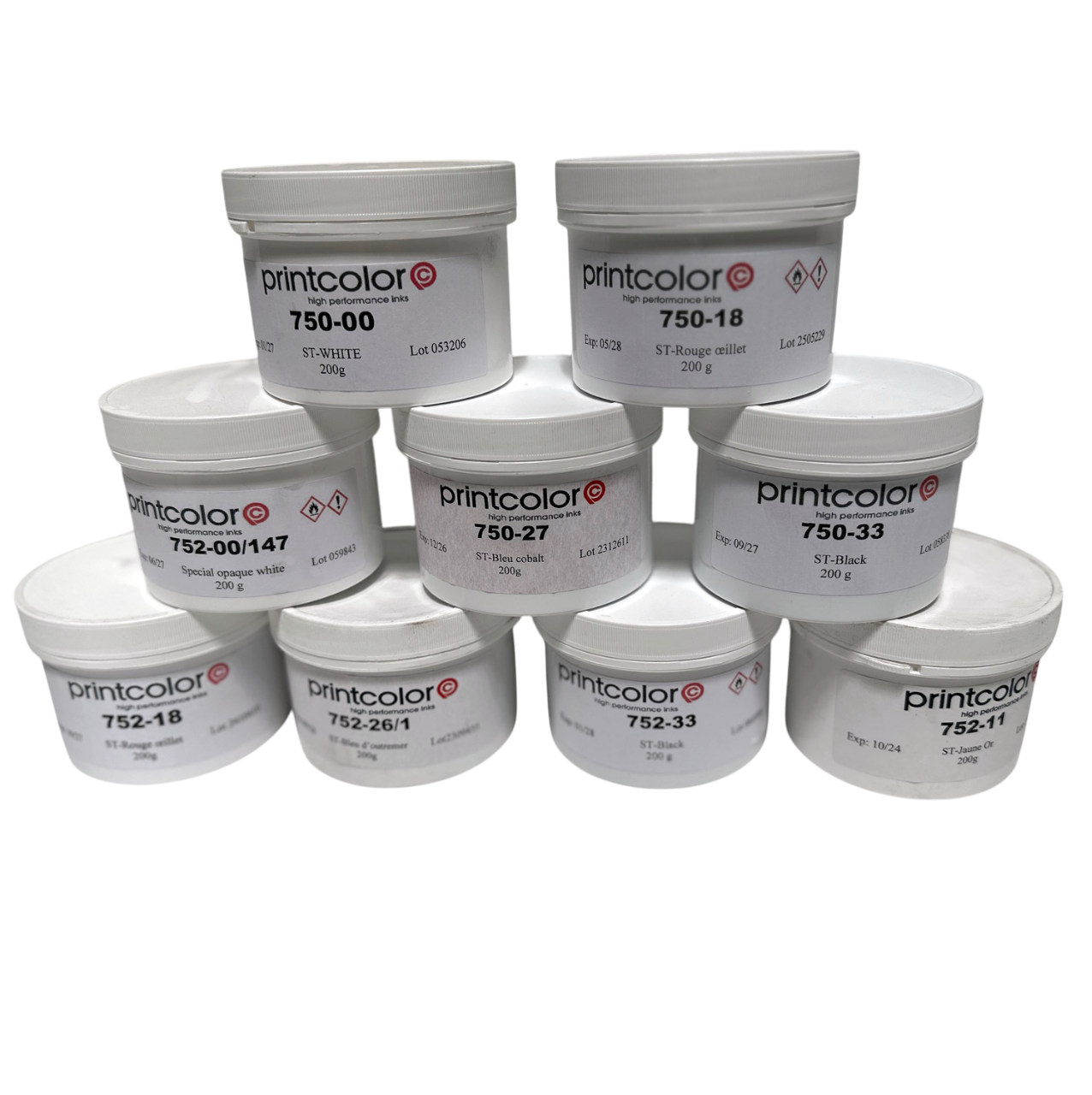


Pad printing inks, solvents, and additives
Starting from: 19.50 €
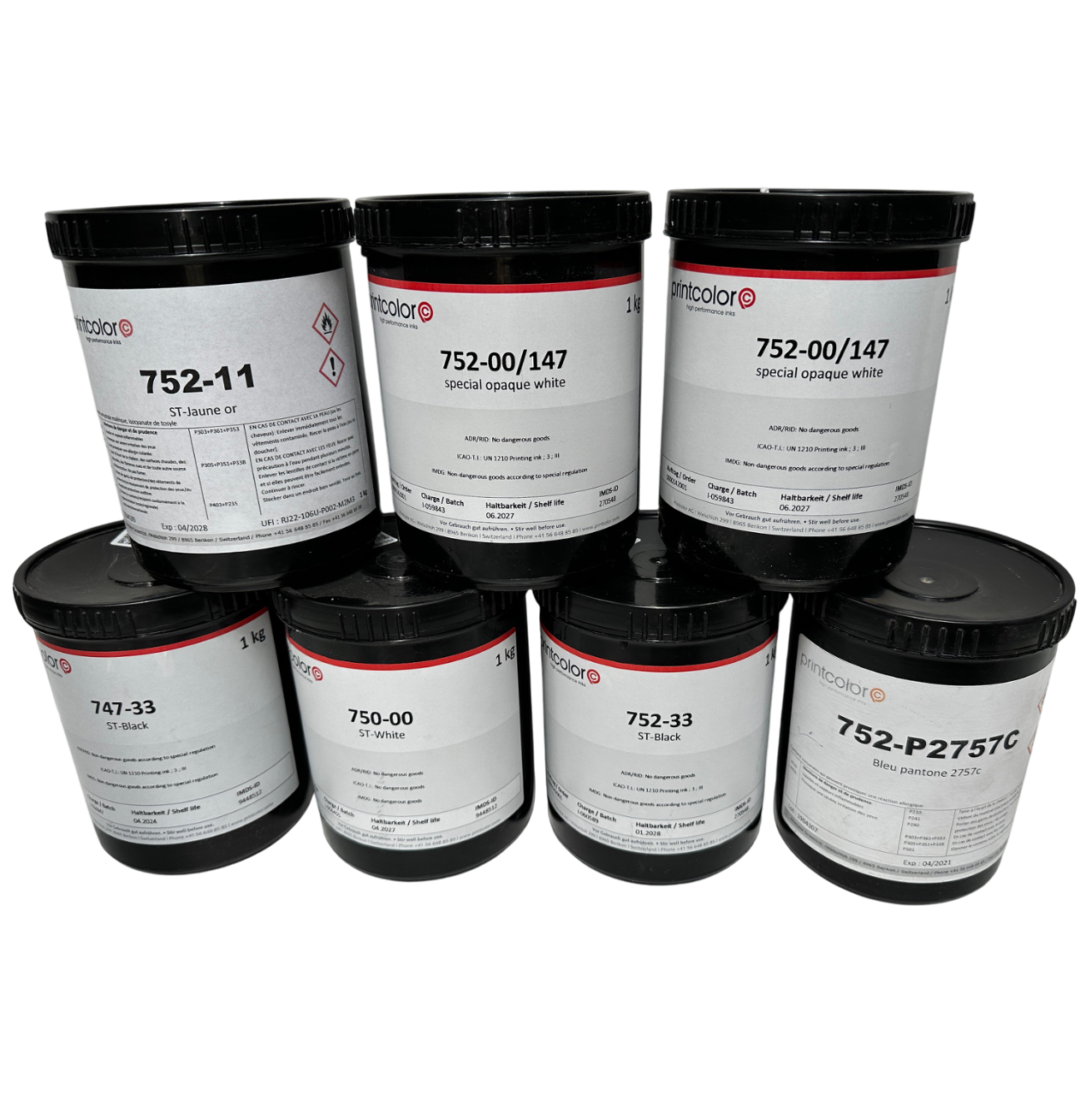
Printcolor pad printing inks are specially formulated to fully exploit the potential of pad printing, enabling precise marking of complex shapes and various materials. Offering excellent opacity, high gloss, and durable adhesion, they meet the most stringent technical and aesthetic requirements.
They can also be custom-formulated according to the most common colorimetric standards (RAL, Pantone®, etc.), ensuring a perfect fit for every application.
Available in single-component, two-component solvent-based systems, and universal UV versions, they cover a wide range of industrial applications.
Highly modular, they can be precisely adjusted to processing parameters, specific production requirements, and complex substrates thanks to a wide range of adapted solvents, thinners, and additives, including auxiliaries for Soft-touch surfaces or those with low surface tension.
Technical data sheet
The inks are organized into families adapted to different materials and production constraints.
The various Printcolor ink categories — 711, 712, 750, 752, 786, 792 — cover all marking needs.
Solvents and additives allow for the adjustment of ink behavior during production: viscosity, drying time, resistance, and print quality.
They consist of: retarders, accelerators, thinners, hardeners, primers (or adhesion promoters), cleaners, and universal solvents.
Features:
Inks:
Ref 711:
Universal single-component ink, suitable for common plastics (ABS, PS, PVC, Polycarbonate)
Good printability and quick drying
Ref 712:
Single-component ink for polypropylenes
Ref 750-751:
Two-component ink (with hardener), ideal for metal, glass, technical plastics, PA, PC, POM, etc.
High chemical and mechanical resistance
Ref 752:
Single or two-component ink offering the greatest material versatility
Formulated for opaque inks, offering very good covering power
Suitable for dark or colored substrates
Ref 786:
Highly versatile two-component ink, offering excellent mechanical, chemical, and outdoor durability
Suitable for metal, anodized aluminum, and certain high-performance plastics
Ref 792:
Specific high-performance ink, formulated for complex or highly stressed substrates: rubber, Tritan
Resistant to abrasion, strong solvents, and extreme conditions
Solvents and additives:
Retarder:
Slows down solvent evaporation
Helps maintain stable viscosity during long production runs or in hot/dry atmospheres
Accelerator:
Reduces curing time to increase production rates
Allows for faster drying even on difficult substrates or in humid/cold environments
Improves the initial resistance of the ink
Thinner:
Adjusts ink viscosity to match the machine and the fine detail of the clichés
Also influences drying time
Hardener:
Used with two-component inks (e.g., 750, 752, 786, 792)
Improves ink adhesion and chemical/mechanical resistance
Primer (or adhesion promoter):
Prepares the substrate (e.g., glass, metal, or difficult plastic)
Improves ink adhesion
Cleaner:
Used for cleaning clichés, pads, and accessories
Specific to each ink to preserve equipment
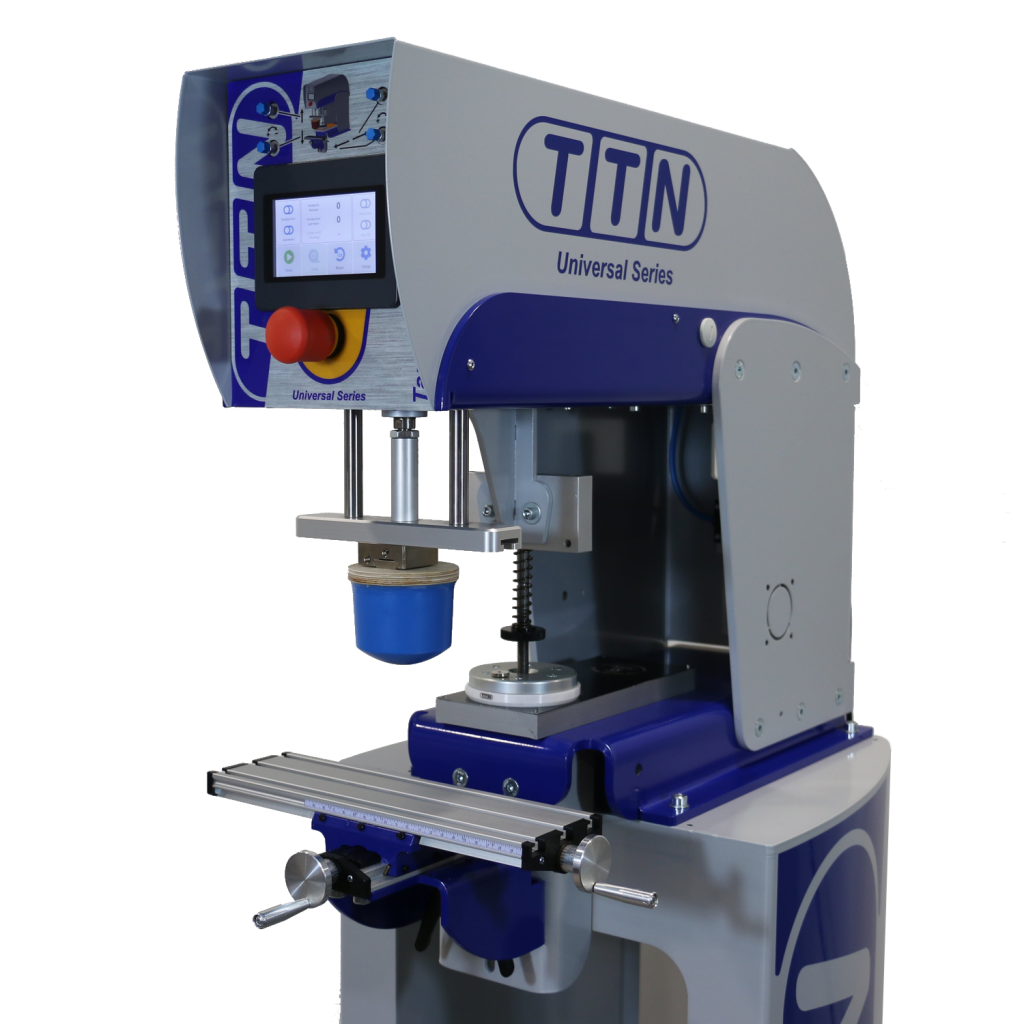
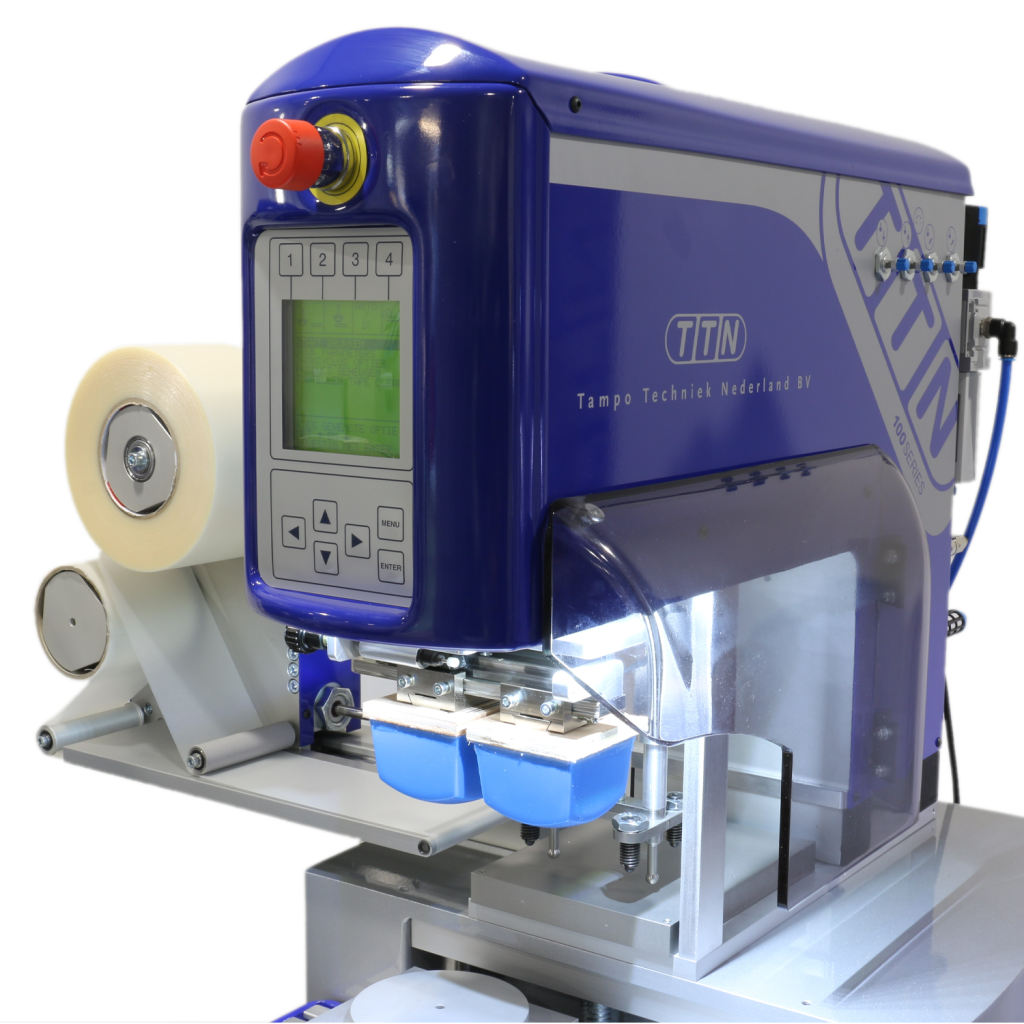
This accessory is compatible with...





FAQ about Pad printing inks, solvents, and additives
What type of ink to use for pad printing?
The choice of ink depends on the material to be marked, as well as the usage constraints (resistance, durability, environment, etc.).
Printcolor, a leader in pad printing inks, offers a wide range adapted to numerous applications:
References
- Optics / Eyewear : 711 (plastics), 751 (glass and metals), 752 (coated plastics and metals), 792 (rubber materials).
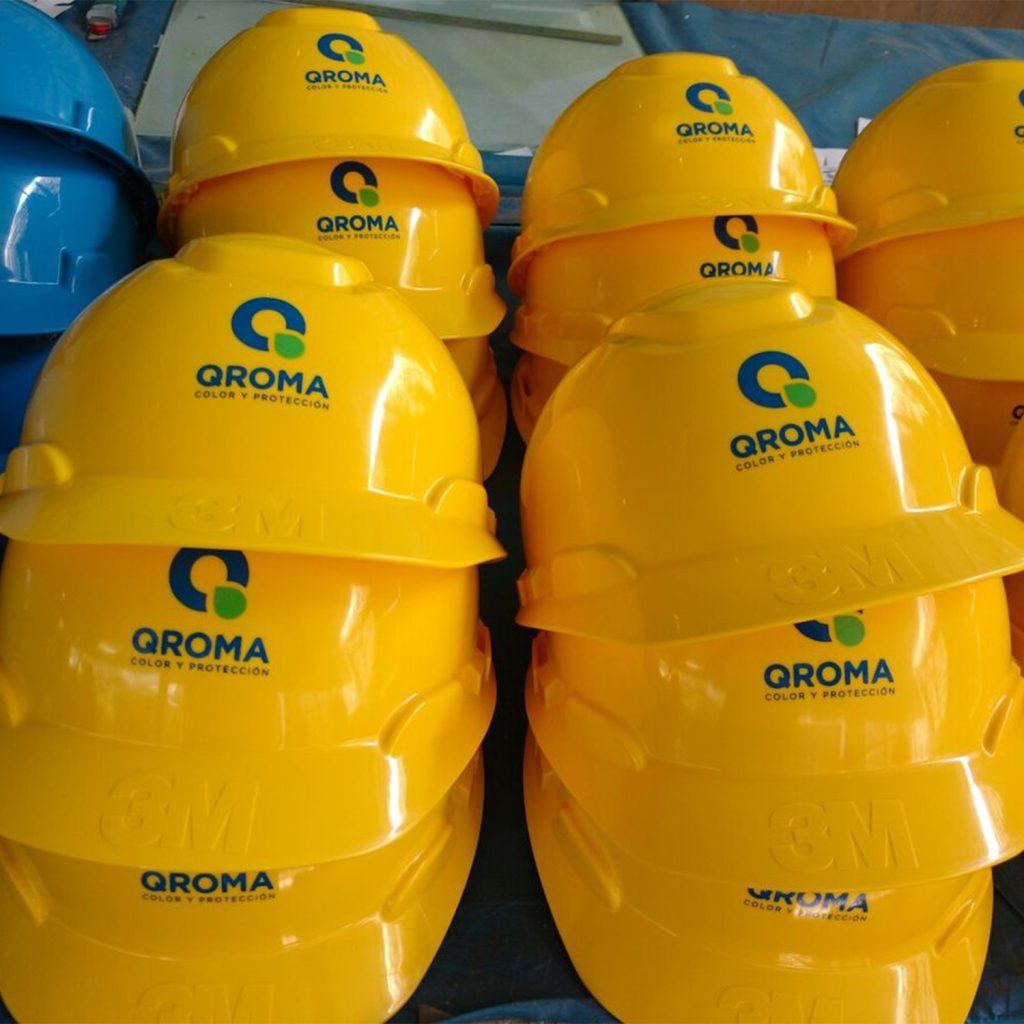
- Promotional items : 711, 712 (untreated PP), 751, 752 (coated plastics and metals), 786 (plastics), 792.
- Toys and baby articles : 751, 752, 786.
- Sports equipment : 752, 786, 792.
- Automotive : 711, 751, 786.
Ink Selection
- An ink / material compatibility chart allows for the selection of the most suitable ink for each substrate.
- It is recommended to consult it systematically before any marking operation.
Specific Tints
- For Pantone, RAL or HKS colors, we can produce custom tints.
- We also provide free formulation software that allows you to create your own mixtures.
What is a one-component and two-component pad printing ink?
The choice between a one-component and two-component ink primarily depends on the desired level of resistance and the constraints of the substrate to be marked.
One-component ink:
- Used alone, simply combined with its thinner.
- Easy to implement and quick to prepare.
- Can be recovered after use from the inkwell and stored for later use.
- Generally suitable for standard applications with moderate mechanical or chemical constraints.
Two-component ink:
- Requires the addition of a thinner and a hardener before use.
- The mixture triggers a chemical reaction that improves adhesion and marking performance.
- Offers better resistance to scratches, abrasion, solvents, and demanding environments.
- Once prepared, its pot life is limited, generally between 6 and 8 hours depending on the ambient temperature.
- After this period, the ink cannot be reused.
THERMOFLAN advantages
Over 60 years of experience
Permanent stock
Best quality/price ratio
Technical availability
Ask our experts for advice
How can we help you?